“WordPress is dying.”
You have probably heard this more than once. With tools like Astro, React frameworks, and AI builders taking over the conversation, it feels like WordPress is losing relevance. Developers are moving away. Agencies are experimenting with alternatives. The narrative sounds convincing.
But it is also incomplete. Because behind the noise, something else is happening. WordPress is not disappearing. It is rebuilding itself around a completely different workflow. One that does not rely on local setups, manual staging, or fragmented tools. Instead, it is becoming cloud-first, CLI-driven, and increasingly powered by AI.
What surprised me the most is how this shift changes who can actually build with WordPress. You do not need to be deeply technical anymore. You just need the right workflow.
And once you see it, it becomes hard to go back.
Table of Contents
What Makes World Think That WordPress Is Dying
The question “Is WordPress dead?” did not appear randomly. It is coming from real shifts in how developers build, ship, and scale applications today.
If you look closely, the concern is not about WordPress disappearing. It is about whether it is keeping up.

Let’s break this down with actual signals, real developer concerns, and what is driving this narrative.
1. Developers Are Comparing WordPress to Modern DX Standards
Today’s developers are used to workflows like:
npx create-next-appand start building instantly- Automatic preview deployments for every pull request
- No manual server or environment setup
- Git-based deployments with zero friction
Now compare that to a typical WordPress workflow that generally looks like
Set up local environment ➝ Configure PHP, MySQL, server ➝ Install WordPress ➝ Sync with staging ➝ Push to production
This contrast is where the first doubt appears.
What developers are saying:
“Why does WordPress still require setup when everything else just runs?”
A developer building a marketing site can deploy a Next.js app on Vercel in under a minute. The same developer may spend 20–30 minutes just preparing a WordPress environment before writing any code.
WordPress cloud platforms like InstaWP have already solved a large part of this problem. Developers no longer need to deal with local setup. They can spin up a fully functional WordPress site in under a minute. The entire development stack comes prebuilt. You can choose the WordPress version, PHP version, server location, and even preconfigure plugins and settings without any manual effort.

In practical terms, this removes the traditional setup bottleneck that made WordPress feel slow to start with.
And yet, in the era of AI and instant development workflows, many developers still feel that WordPress is lagging behind.
Not because it cannot do what modern tools can do. But because the perception has not caught up with how much the workflow has already evolved.
The issue here is not capability. It is speed and experience.
2. The Rise of Headless Architectures Is Changing Perception
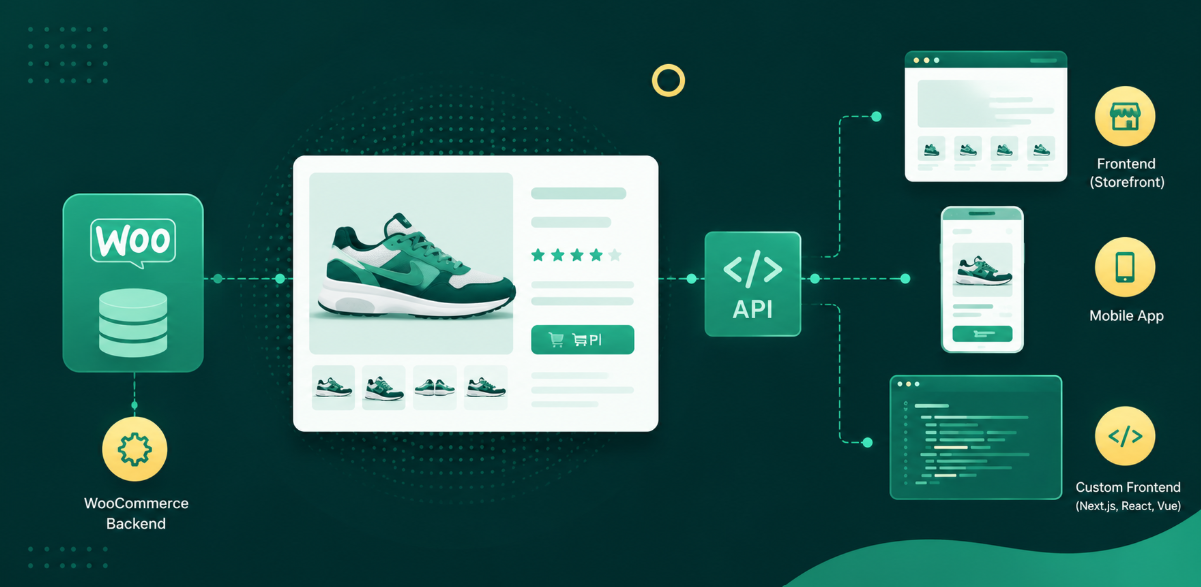
Another major reason behind the “WordPress is dying” narrative is how it is being used today. Many companies have not stopped using WordPress. They have simply changed how they use it. Instead of running everything through WordPress, they use it as a content backend, a headless CMS. or an API layer.
And then move the frontend to modern tools like:
- React frameworks such as Next.js
- Static site generators
- Custom-built applications
This shift is important. Because from the outside, it looks like WordPress has been replaced. But in reality, it is still doing a critical job behind the scenes.
When developers no longer interact with WordPress directly:
- They do not log into wp-admin as often
- They do not build themes the same way
- They interact more with frontend frameworks
So naturally, it starts to feel like WordPress is no longer part of the core stack. But, this doesn’t mean that WordPress is dying. It means that WordPress is repositioning and is evolving from a monolithic system handling everything to a flexible content engine that integrates into modern stacks.
The problem is not usage. The problem is visibility.
And when something becomes less visible, it is often assumed to be less relevant. That is exactly what is happening with WordPress in headless architectures.
3. Agencies Are Frustrated with Environment Management
For agencies managing multiple client sites, the biggest pain point is rarely the actual development work. It is everything that surrounds it.
The friction shows up in the most predictable places. A new developer joins the team, and the first two days are spent helping them configure their local environment. Two client sites are running different PHP versions. The staging environment behaves differently from production. A plugin update that worked fine locally breaks something on the live site.
What agencies say:
“Half our time goes into setup and environment fixes, not actual development.”
This is not an exaggeration. When you are managing ten, twenty, or fifty client sites, the overhead compounds fast. And the cost is not just time. It is confidence. Every inconsistency between environments is a risk that something will break when it matters most.
This frustration does not mean WordPress is failing. It means the traditional way of managing WordPress environments has not kept up with how agencies actually work today.
4. AI Is Changing What Developers Expect from Their Workflows
AI tools have moved from novelty to daily utility. Developers are using tools like Claude, Cursor, and GitHub Copilot to write code faster, debug problems, and automate repetitive work. The expectation is no longer just “can I build this?” It is “how quickly can I build this, and how much of it can I automate?”
Must read: How to Connect Claude to WordPress
Traditional WordPress workflows were not designed with this in mind. They were built around manual configuration, dashboard interactions, and plugin-by-plugin management. That is a slow way to work when everything around you is speeding up.
What developers are saying:
“If I can describe what I want and have AI generate it, why am I still clicking through menus and setting up environments by hand?”
This gap between expectation and experience is real. And it feeds directly into the perception that WordPress is falling behind.
But here is the thing. The tools to close that gap already exist. They are just not visible enough yet.
The Real Issue Is Not WordPress. It Is the Workflow Around It.
Every signal we just walked through points to the same root cause. WordPress as a platform is not struggling. It powers over 43% of all websites globally, and that number has been growing, not shrinking. WooCommerce alone runs millions of online stores. Enterprise teams, media companies, and product studios continue to choose WordPress at scale.
What is struggling is the workflow layer around it.
Local setup, manual staging, fragmented tools, and dashboard-heavy operations were designed for a different era. They worked when development moved at a slower pace and teams were smaller. Today, they create friction where there should be speed.
And that is exactly the problem that a new generation of WordPress tooling is built to solve.
WordPress Is Not Dying. It Is Being Rebuilt Around a Smarter Workflow.
Over the past two years, the way professional WordPress development works has changed significantly. Not in theory. In practice. Cloud-first WordPress environments, CLI-driven control, and AI-powered interaction are now real, production-ready tools that agencies and developers are using every day.
Let me break down what this new workflow actually looks like.
Cloud-First: No More Setup Overhead
Instead of installing WordPress locally, you provision it in the cloud. Instantly. With InstaWP’s managed cloud platform, you can spin up a fully functional WordPress site in under a minute. The environment comes prebuilt with your chosen WordPress version, PHP version, server location, and plugin configuration. No local stack. No dependency management. No database setup.

This is not just a convenience. It changes the economics of development. When environment setup takes a minute instead of an hour, you stop thinking of it as overhead. You start treating environments as disposable, which is exactly how modern development should work. Spin one up, test something, keep it or delete it. The cost of experimentation drops to almost nothing.
CLI-First: Control Without Complexity
WP-CLI has been the standard for terminal-based WordPress management for years. It is powerful. It lets you manage plugins, users, database operations, and more from the command line. But it operates inside a server. You still need to provision that server, configure access, and manage the infrastructure around it.
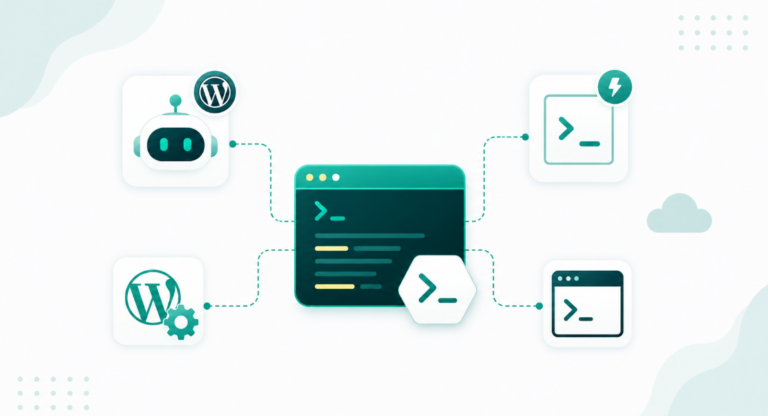
InstaWP CLI extends that idea in a meaningful way. It gives you control over the entire WordPress environment, not just what is running inside it.
You do not need to log into the InstaWP dashboard. You do not need to open a browser, click through a UI, or configure anything manually. You open your terminal, and you are in control.
You can create WordPress site without touching a browser using a single command.
instawp create --name client-project --php 8.3That single command provisions a fully functional WordPress site on InstaWP’s managed cloud infrastructure. You are choosing the PHP version right there in the terminal. No dashboard login. No form to fill out. No waiting around clicking refresh. The site spins up and the CLI tells you when it is ready.

For developers who are used to waiting for environments to come alive, this feels like a different world.
Once your site is live, you can run WP-CLI commands directly against it. No SSH keys to generate. No server credentials to manage. Just the site name and the command. For instance, the below command can give you a full list of installed plugins on that site, exactly as WP-CLI would on a local or remote server, except you skipped all the access setup that normally comes before it.
instawp wp client-project plugin listNeed to verify the site URL or check a specific option value? Use the commad below and it’s done.
instawp wp client-project option get siteurlInstaWP CLI is not limited to WordPress commands. You can run server-level commands on your cloud environment just as easily.
instawp exec client-project php -vThis checks the PHP version running on that specific site’s environment. Useful when you are verifying that the version you specified during creation is active, or when debugging compatibility issues.
instawp exec client-project cat wp-config.phpNeed to inspect the wp-config file directly? You can do that without opening an FTP client, logging into a file manager, or setting up any additional access.
When you have made changes locally and need to push them to your cloud environment, you do not need to zip files, use an FTP client, or log into anything.
instawp sync push client-project --path ./wp-content/This pushes your local wp-content directory to the remote site using rsync under the hood. Fast, reliable, and completely terminal-native.
You can also run a dry run first if you want to preview what will change before committing:
instawp sync push client-project --dry-runThe broader point here is that your entire WordPress environment, from creation to management to file sync, lives in the terminal. You are not context-switching between a browser, an FTP client, a dashboard, and a terminal. The workflow stays in one place, which means fewer interruptions and faster execution.
For agencies managing multiple client projects, this also means you can script repetitive tasks. Creating five environments for a batch of client projects does not require five browser sessions. It requires five lines in a shell script.
What makes this different from just using WP-CLI on a remote server is the abstraction layer. You are not managing SSH keys manually, configuring server access, or dealing with infrastructure. The CLI handles that. You focus on the work.
For agencies building preview environments for client reviews, or developers testing feature branches before merging, this workflow changes how fast you can move. You create an environment, run your tests, share a link, and delete it when you are done. No cleanup headaches. No lingering staging sites eating up resources.
CI/CD Without the Complexity
One of the strongest signals that WordPress development is maturing is how easily InstaWP CLI integrates into automated pipelines.
Consider this workflow for a pull request preview environment:
export INSTAWP_TOKEN=${{ secrets.INSTAWP_TOKEN }}

# Create a preview site for the PR
instawp create --name "pr-$PR_NUMBER" --json

# Run a smoke test
instawp wp "pr-$PR_NUMBER" option get siteurl

# Clean up after merge
instawp sites delete "pr-$PR_NUMBER" --forceThis is the Vercel model applied to WordPress. Every pull request gets its own live preview environment. QA happens in a real WordPress install, not a simulated local setup. And it tears itself down automatically when it is no longer needed.
For developer teams that have been envying the deployment experience of modern frontend frameworks, this is the answer.
AI as the New Interface for WordPress
The third layer of this shift is where the future starts to look genuinely different. WordPress has always required you to interact through a dashboard. You log in, navigate menus, configure settings, and manage content manually. For developers and agencies managing dozens of sites, this is time-consuming work that does not scale.
InstaWP’s WordPress MCP integration changes the interaction model entirely.

MCP, or Model Context Protocol, is a standardized format that allows AI assistants like Claude to interact directly with applications using natural language. When applied to WordPress, it means you can manage your site by describing what you want rather than clicking through it.
Practical examples of what this looks like:
Instead of navigating to Posts and creating a new post manually, you say: “Create a draft blog post titled ‘Our Summer Collection’ with a brief intro about seasonal trends.”
Instead of checking plugin status across ten client sites manually, you ask: “Which of my sites have outdated plugins?”
Instead of toggling maintenance mode from the dashboard: “Put the staging site into maintenance mode while I push these changes.”
Did you know?
InstaWP’s WordPress MCP Server is open source, built on Node.js, and connects directly with Claude Desktop/Code and ChatGPT. You can extend it with custom tools for WooCommerce, SEO plugins, or any custom post type your workflow depends on.
For non-technical users, this is transformative. You no longer need to understand where a setting lives in wp-admin. You just describe the outcome, and the AI handles the navigation.
For agencies, this opens up a new service model. You can build AI-powered WordPress assistants for clients, automate content workflows, and deliver more value without proportionally more time.
With the help of all these cutting-edge tools, WordPress is seamless and powerful than ever before. Let me put this all together with a concrete before and after.
| Task | Old Workflow | New Workflow |
|---|---|---|
| Start a new project | Set up local environment, configure PHP/MySQL, install WP | instawp create --name project |
| Test a plugin update | Set up staging manually, push changes | Spin up sandbox, test, delete |
| Onboard a new developer | Half-day setup session | Share environment link, done |
| Create a PR preview | No standard process | Automated via CLI in CI pipeline |
| Update client content | Log into wp-admin, navigate manually | Natural language via MCP + AI |
| Manage 20 client sites | Log into each separately | Central dashboard + CLI commands |
The difference is not small. It changes how fast you can move, how confidently you can test, and how much of the repetitive work you can hand off to automation.
The Bigger Picture: WordPress Is Becoming Infrastructure
Here is the thought I want to leave you with.
The most powerful technologies do not stay visible forever. They become infrastructure. Electricity is not exciting. It is just always there. The internet is not something most people think about. It just works.
WordPress is moving in that direction.
As it becomes cloud-hosted, CLI-managed, and AI-operated, it becomes less of something you wrestle with and more of something that runs in the background while you focus on actual work. The platform itself fades into the infrastructure layer, and what stays visible is the product you are building on top of it.
That is not a sign of decline. That is what maturity looks like for a platform that powers nearly half the internet.
The question was never whether WordPress is dead. The question is whether the way we build with it has kept up.
And now, for the first time, the answer is yes.
Conclusion
WordPress is not dying. It is rebuilding itself around a faster, simpler, and more accessible workflow. Cloud-first environments remove the setup friction. CLI tools like InstaWP CLI give developers full control without managing infrastructure. AI integrations through MCP change how we interact with WordPress entirely.
The result is a platform that works better for experienced developers, moves faster for agencies, and is accessible to people who are not technical at all.
If you have been sitting on the fence about whether WordPress is the right foundation for your work in 2026, the answer is clearer than it has ever been. The tooling has caught up. The workflow has evolved. All that is left is to get started.
Get started with InstaWP, add a card for $25 in credits, and spin up your first cloud WordPress site today. No local setup. Just WordPress, ready in under a minute.
FAQs
1. Is WordPress actually dying in 2026?
No. WordPress powers over 43% of all websites globally as of 2026, and that number continues to grow. The perception of decline comes from workflow frustration, not platform failure. The tooling around WordPress has evolved significantly, making it faster and more accessible than ever.
2. What is InstaWP CLI and how is it different from WP-CLI?
WP-CLI manages WordPress inside a server. InstaWP CLI manages the entire WordPress environment, including creating and deleting sites, running commands remotely, syncing files, and integrating into CI/CD pipelines. It is designed for cloud-first workflows where environment management matters as much as site management.
3. Do I need to know how to code to use InstaWP?
No. InstaWP’s managed cloud platform is designed to be accessible to developers and non-developers alike. You can create and manage sites through the dashboard without using the CLI at all. The CLI and MCP integration add power for technical users, but they are not required.
4. What is WordPress MCP and why does it matter?
CP (Model Context Protocol) is a standard that allows AI assistants like Claude to interact with WordPress using natural language. Instead of navigating wp-admin manually, you describe what you want and the AI executes it. For agencies managing multiple sites, this dramatically reduces the time spent on repetitive tasks.