Are you a freelancer, an agency, or a business owner seeking to build an e-commerce website? A WordPress WooCommerce store offers numerous benefits, making it a worthwhile endeavor.
An eCommerce website allows you to reach customers beyond your local area, potentially accessing a global online market, lower operating costs, a better inventory management.
An online store is easier to scale than a physical one, you can expand your product range, enter new markets, and handle larger transactions without making an overwhelming additional investment. This significantly increases your customer base and sales opportunities.
By building an eCommerce website, you can leverage these benefits to drive growth and ensure that your business remains competitive in the digital space. There are many platforms that you can use to build an online store but we recommend using WordPress and WooCommerce.
Table of Contents
WordPress
WordPress is a powerful and versatile Content Management System (CMS) that allows users to build and manage websites easily. The CMS is equipped with various themes and plugins that allow you to customize and enhance the functionality of your website.
WooCommerce
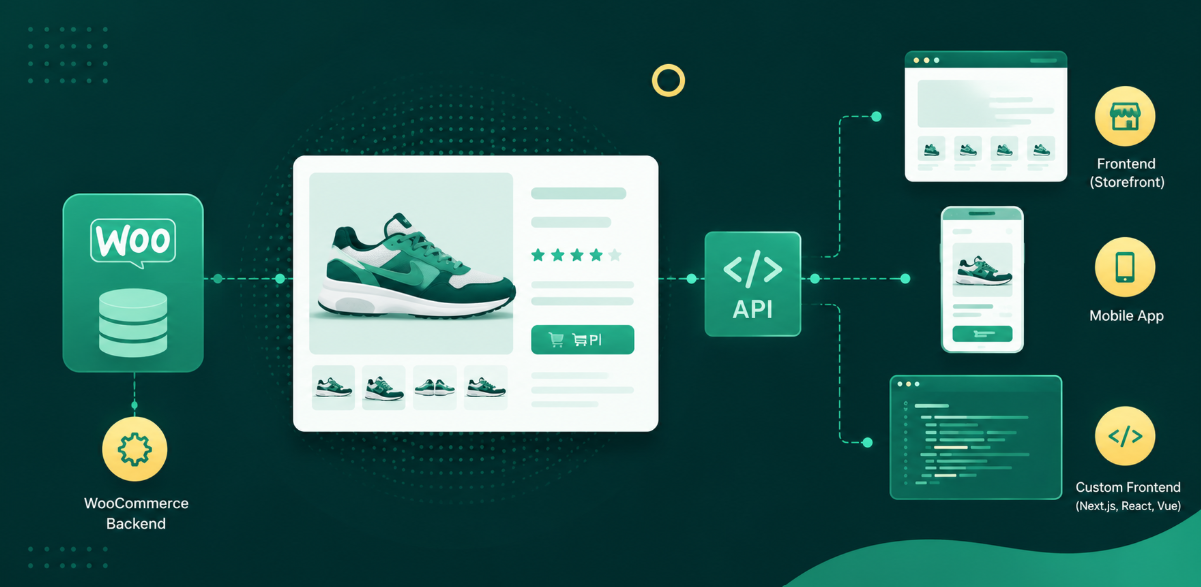
WooCommerce is a powerful and widely used open-source plugin designed to help users sell products and services directly from their WordPress sites. It transforms a WordPress site into a fully functional online store. Here’s why you should use WooCommerce to build your eCommerce WordPress website.
Free and open source. WooCommerce is free to download, making it an option for all business sizes. Being open-source it’s flexible and allows extensive customization.
Seamless integration with WordPress. WooCommerce is fully built to integrate with WordPress, leveraging the platform’s user-friendly interface and content management capabilities.
Extensive Features. WooComerce offers a comprehensive set of features that cover all aspects of running an online store. These features include product management, order management, payment gateways, shipping options, tax management, and inventory management.
Customization. WooCommerce is highly customizable, with a wide range of extensions to add specific functionalities such as subscriptions, booking, membership, and more. You can also customize the layout of your website using WooCommerce compatible theme.
Analytics and Reporting. WooCommerce provides built-in analytics and reporting tools to help you track sales, revenue, and customer behavior. You can view detailed reports on orders, stock levels, and customers helping you make informed business decisions.
WooCommerce is a flexible and strong eCommerce solution for WordPress users, providing great features, customization options, and scalability to meet various eCommerce business needs.
Why Should You Build an eCommerce Website With WordPress?
An eCommerce website offers numerous benefits to business owners. There’s no doubt that online stores have become a catalyst for businesses, enabling them to make more sales due to a larger online customer base. Here are some reasons why you should build an eCommerce website with WordPress.
WordPress is easy to use: WordPress is a low-code tool, even those with minimal technical knowledge can learn and use it easily. The dashboard is intuitive, making it easy to add products, manage orders, and update content.
Flexibility and Customization: WordPress has a lot of customization options. With thousands of themes and plugins available, you can build an eCommerce site that meets your specific business needs and preferences.
Themes determine the look and feel of your website, while plugins add extra functionality to your site. Plugins can add specific features like SEO, security features, and product management to your site.
WooCommerce Integration: WooCommerce is the most popular eCommerce plugin that can transform your site into a powerful online store. It offers a wide range of features, including product listings, order management, payment processing, shipping options, etc. WooCommerce is highly extensible, with numerous add-ons available.
Cost-effective: WordPress is free, with many themes and plugins available for free or at affordable prices, making it a cost-effective solution for building an eCommerce website. Even the premium themes and plugins are cheaper than most eCommerce platforms.
Content Management System: Besides eCommerce, WordPress excels at content management. This means that you can easily create and manage blog posts and pages, providing valuable information and insights to your customers.
By combining WordPress with a free talking avatar creator, you can further enhance your content by offering interactive, personalized virtual assistants that engage visitors, answer questions, and improve the overall user experience.
Scalability: WordPress can handle all website sizes, from small online stores to large eCommerce sites with thousands of products. As your business grows, you can enhance performance by using advanced plugins.
Community Support: Being an open-source platform, WordPress has a large and active community. This means that support is available through documentation, tutorials, forums, and various meetup groups. If you face a challenge, you’re sure to find help.
Overall, WordPress is an excellent option for businesses wishing to establish their online presence because it provides a flexible, cost-effective solution for building eCommerce websites.
12 Tips to Build a Successful eCommerce Website with WordPress
- Get a domain name for your website
A domain name is a unique address that identifies your website on the internet. It’s the name for your business on the web. To build a website, you need to register a domain name with a domain registrar.
Consider choosing a name that communicates your products or services, choose a name that users can easily relate to. Customers need to understand what you’re selling at a glance.
Keep your domain name short to avoid confusing customers with many words, It should be easy to remember. Do not use special characters like hyphens(-) and avoid using double letters for example, a domain name like dressShop with the letter ‘s’ appearing multiple times might confuse customers.
If possible, include keywords in your domain name. For example, if you’re building an eCommerce store that sells leather bags, you could say elegantleatherbags.com. This will give you a boost in the search results.
Take time and choose a name that will allow you to scale as you establish your brand. Most hosting providers will offer you the domain for free in the first year.
- Choose a hosting provider
Select a hosting provider that offers optimized services for WordPress and WooCommerce. A reliable hosting provider that specializes in managed WordPress hosting is essential for your eCommerce website. InstaWP hosting is the right choice for hosting your eCommerce website.
- Install WordPress and WooCommerce Plugin
With your domain name and hosting, you can now install WordPress. InstaWP can power up a WordPress site most easily and quickly. Additionally, install WordPress eCommerce development plugins like WooCommerce to add the necessary online store functionalities to your website.
- Select a WordPress eCommerce theme
The design of your site matters. Choose a theme designed for eCommerce that aligns with your brand and offers a flawless browsing experience. Use themes like Storefront that are optimized for performance and are tailored for online stores.
- Design your eCommerce Website
Customize your site’s appearance to match your brand and make it visually appealing to your customers. Use the WordPress customizers to add your colors and fonts, upload your logo, and ensure consistent branding throughout the site.
Organize your products into categories and create product pages. High-quality images, detailed product descriptions, and reviews improve engagement, conversion rates can significantly impact your customer’s buying decisions.
You can build your site on staging and test out different features before going public. With the InstaWP Connect plugin, you can create a staging site, work from there, and then publish when you’re content with your changes.
- Make your site user-friendly
E-commerce websites tend to have multiple pages. Implement an excellent menu structure to ease navigation throughout the site, clear call-to-actions that encourage users to make purchases, a streamlined checkout process, and a search function to help customers find products easily. Utilize plugins that enhance the user experience, such as live chat support.
- Implement a secure payment gateway
Configure multiple payment options, such as Paypal, and Stripe, and direct bank transfers to cater to diverse customer preferences. Implement security measures to protect your customer’s data from potential threats.
- Optimize the site for Mobile devices
Due to the increasing use of mobile devices, ensure your site’s theme is mobile-responsive. Test your site on different devices to guarantee a seamless shopping experience.
- Use effective SEO strategies
Make sure you’re findable. Optimize product pages for search engines by using relevant keywords, and optimizing meta tags and descriptions. These increase the chances of your product pages being returned to the Search Engine Results Page. Additionally, Use SEO plugins like Yoast SEO to improve your site’s ranking in search results.
- Give customers a chance to talk
Include product reviews and ratings on your product pages. New customers love to read feedback from other users, so giving them a chance to review products is a great deal. Address both positive and negative reviews professionally to build trust with your customers. Remember, your response can influence how others feel about the product/ service.
- Monitor and analyze your website
Use Google Analytics to regularly monitor website traffic, sales data, and customer behavior. Identify areas for improvement and leverage them for successful strategies.
- Secure your Website
Use SSL certificates to secure transactions and protect your customers’ data. Many hosts usually provide SSL certificates for free. Furthermore, install security plugins like Wordfence to enhance your site’s security.
Conclusion
In conclusion, the key to a successful eCommerce website is not only the technical aspect but also a good user experience. Continuously improve your store based on analytics and customer feedback. By following these tips, you can build a robust WordPress Wocommerce website that meets the needs of your customers and supports your business goals.
FAQS
What Hosting Provider should I choose for my eCommerce Website?
Choosing a reliable hosting provider is crucial for your site’s performance and security. Select a hosting provider that offers Managed WordPress hosting with features like automated updates, easy migration, and customer support. InstaWP hosting is an excellent option for your WordPress WooCommerce website.
What are the best Themes for a WordPress eCommerce Website?
Some of the best eCommerce themes include Astra, Storefront. These themes are optimized for speed, and mobile responsiveness and are fully integrated with WooCommerce, the leading WordPress eCommerce development plugin.
What Plugins should I use to enhance my WordPress eCommerce Website?
Besides WooCommerce, essential plugins include Yoast SEO for search engine optimization, Wordfence for security, WP Super Cache for performance optimization, and MailChimp for WooCommerce for email marketing. These plugins improve your site’s functionality and user experience.
What Payment Gateways are recommended for a WordPress eCommerce Website?
Popular WordPress eCommerce payment gateways include Paypal and Stripe. WooCommerce supports these gateways and many others, allowing you to offer multiple payment options to your customers hence increasing your conversion rates.
How do I optimize my WordPress eCommerce site for SEO?
Use SEO plugins like Yoast to optimize meta titles, descriptions, and keywords. Create high-quality content and ensure your site’s structure is clean and simple. Optimize images using alt tags and maintain a fast-loading site using cache plugins.
How do I track the performance of my eCommerce website?
Install Google Analytics to monitor visitor behaviors and key metrics such as traffic sources, sales performance, and conversion rates. WooCommerce also offers built-in analytics and reporting features that provide insights into your store’s performance, helping you make informed decisions.