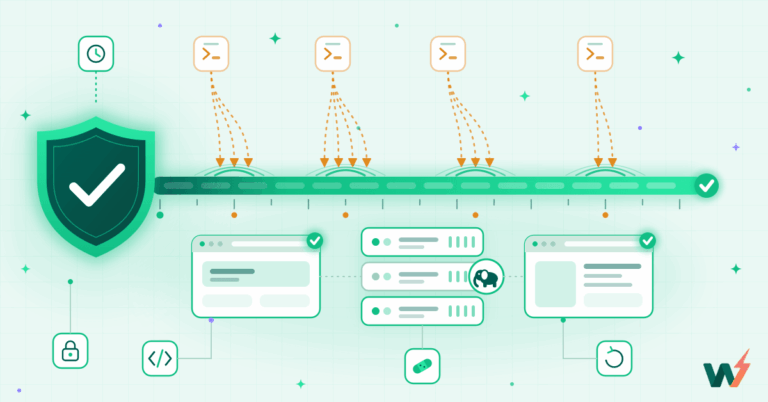
CVE-2026-115560 is a remote code execution flaw in PHP’s session upload-progress feature. It can only be triggered under an unusual combination of PHP configuration and application code, and PHP will fix it in security releases scheduled for Thursday 19 November 2026 between 14:00 and 14:30 UTC. Until you can update, PHP recommends setting session.upload_progress.enabled=0.
This advisory explains what the flaw is, who is affected, how it differs from the October php2shell vulnerabilities, and what site owners and InstaWP customers should do.
- What it is: CVE-2026-115560 is a possible remote code execution path in PHP’s session upload-progress feature, disclosed by PHP on 23 October 2026.
- Who is affected: only applications that configure the session serializer as
php_binaryorphp_serialize, then switch it tophpat runtime beforesession_start(), with session upload progress still enabled. - When it gets fixed: PHP’s security releases are scheduled for 19 November 2026, between 14:00 and 14:30 UTC. PHP will publish fixed versions and the full advisory with them.
- What to do now: update PHP as soon as the fix is out. Until then, set
session.upload_progress.enabled=0if your host lets you, and check your code for a runtime serializer switch. - Not php2shell: it is a separate flaw from CVE-2026-109618 and CVE-2026-109619, the critical php2shell bugs PHP fixed on 21 October 2026.
CVE-2026-115560 at a glance
| Question | Answer |
|---|---|
| What is it? | A possible remote code execution path in PHP session upload progress, which PHP calls an “unlikely RCE vector”. |
| Disclosed | 23 October 2026, in an informational advisory on php.net. |
| Trigger conditions | A php_binary or php_serialize serializer in configuration, switched to php at runtime before session_start(), with session upload progress enabled. |
| Fix release | Thursday 19 November 2026, 14:00 to 14:30 UTC, per PHP’s 18 November notice. |
| Severity and affected versions | Not published by PHP before the release. PHP says the highest severity in the 19 November release is critical. |
| Interim mitigation | session.upload_progress.enabled=0, set in php.ini or the PHP-FPM pool. |
| Exploitation | No confirmed exploitation reported as of 19 November 2026. Proof-of-concept claims exist on GitHub. |
| Related to php2shell? | Same feature area, separate flaw. php2shell (CVE-2026-109618 and CVE-2026-109619) was fixed on 21 October 2026. |
| PHP 8.1 and older | No longer receive updates from the PHP project. Move to PHP 8.3 or newer. |
What is CVE-2026-115560?
CVE-2026-115560 is a remote code execution vulnerability in PHP’s session upload-progress feature, which PHP disclosed in an informational advisory on 23 October 2026. PHP describes it as “an unlikely RCE vector” and chose to fix it in its regular four-week release cycle rather than with an emergency release.
Session upload progress is a PHP feature that tracks how far a file upload has got. While the server receives an upload, PHP writes the progress into the user’s session, including the field names and filenames the browser sent. That write happens before any application code runs.
PHP’s session.serialize_handler setting decides how session data is stored. The trigger is a mismatch between the serializer set in configuration and the one the application switches to at runtime. PHP has not published the technical details yet and says it will do so in a full advisory alongside the 19 November 2026 release.
Who is affected by CVE-2026-115560?
A site is exposed to CVE-2026-115560 only when all three of these conditions are true at the same time, according to PHP’s 23 October 2026 advisory:
- The PHP configuration sets
session.serialize_handlertophp_binaryorphp_serialize. - The application switches the handler to
phpat runtime withini_set()before callingsession_start(). - Session upload progress is still enabled (
session.upload_progress.enabledis on, which is PHP’s default).
PHP says applications that never change the serialize handler at runtime can keep the feature enabled. Because this setup is uncommon, PHP rates the issue as unlikely to affect most sites.
Does WordPress core use PHP sessions?
No. On 19 November 2026 InstaWP searched all 1,316 PHP files in WordPress 7.1.5 core (wp-admin, wp-includes and the root files) for session_start, serialize_handler and upload_progress. The only match was the Site Health check that warns you when a plugin has left a PHP session open. WordPress core never starts a session and never switches the serializer.
That means a WordPress site’s exposure to CVE-2026-115560 depends on its plugins, themes and custom code, not on WordPress itself. Some plugins do start PHP sessions, so check yours with the command in the next section.
When will PHP release the fix for CVE-2026-115560?
PHP’s fix for CVE-2026-115560 is scheduled for Thursday 19 November 2026, between 14:00 and 14:30 UTC. The PHP security team announced the date in an advance notice on 18 November 2026, which says the releases address vulnerabilities in all supported PHP versions and that the highest severity is critical.
The same notice says the critical issues “require either non-default configuration or uncommon setups”, and that technical details and fixed version numbers will be published alongside the releases. Before the release, PHP had not published a CVSS score or a list of affected versions for CVE-2026-115560. This page will add both once php.net publishes them.
| Date (UTC) | What happened |
|---|---|
| 21 October 2026 | PHP fixes php2shell (CVE-2026-109618 and CVE-2026-109619). The CVE-2026-109619 advisory already lists session.upload_progress.enabled=0 as a mitigation. |
| 23 October 2026 | PHP discloses CVE-2026-115560 and recommends session.upload_progress.enabled=0 until the next bugfix release. |
| 11 November 2026 | Brandefense reports that CVE.org and NVD have no record yet and CISA KEV does not list the CVE. |
| 18 November 2026 | PHP announces the security release for 19 November, highest severity critical. |
| 19 November 2026, 14:00 to 14:30 | Scheduled PHP security releases with fixed versions and the full advisory. |
Is CVE-2026-115560 being exploited?
No confirmed exploitation of CVE-2026-115560 had been reported as of 19 November 2026. SecurityOnline reported on 23 October 2026 that no source reported exploitation, and Brandefense’s status of 11 November 2026 lists exploitation as not confirmed and notes that CISA’s Known Exploited Vulnerabilities catalog does not include it.
Proof-of-concept claims do exist. According to Brandefense, a GitHub search on 11 November 2026 found 26 repositories naming CVE-2026-115560, created between 21 and 31 October, of which at least six describe a proof of concept, a lab or an exploit framework. Many of the others are checkers or hardening scripts. InstaWP has not tested these repositories and does not link to them here.
How is CVE-2026-115560 different from php2shell?
CVE-2026-115560 is a separate vulnerability from php2shell, even though both involve session upload progress. php2shell is the informal name for CVE-2026-109618 and CVE-2026-109619, two critical flaws PHP fixed on 21 October 2026. InstaWP covered them in its php2shell advisory.
| php2shell (CVE-2026-109618, CVE-2026-109619) | CVE-2026-115560 | |
|---|---|---|
| Disclosed | 20 October 2026 (advance notice) | 23 October 2026 |
| Fixed | 21 October 2026, emergency release | 19 November 2026, regular release (scheduled) |
| Severity | CVSS v4.0 9.2, critical (both CVEs) | Not published before release |
| Who is exposed | PHP said every installation serving web requests was at risk | Only sites with the runtime serializer switch and upload progress enabled |
| Interim mitigation | Several measures, including session.upload_progress.enabled=0 | session.upload_progress.enabled=0 |
Read the table this way: php2shell was broad and urgent, so PHP shipped an emergency release. CVE-2026-115560 is narrow, so PHP waited for the regular cycle. The interim setting is the same, so if you applied session.upload_progress.enabled=0 for php2shell, PHP says to keep it in place.
What should site owners do about CVE-2026-115560?
Site owners should update PHP once the 19 November 2026 fix is available, and use the interim setting until then. In order:
- Update PHP when the fix ships. Install the fixed release for your PHP branch as soon as PHP or your host makes it available. This is the only complete fix.
- Disable session upload progress in the meantime, if your host allows it. Set
session.upload_progress.enabled=0in php.ini or your PHP-FPM pool, then restart PHP-FPM. Normal file uploads keep working. Only the progress tracking in the session stops. - Check your code for a runtime serializer switch. Search plugins, themes and custom code for
serialize_handler. Anyini_set()call that changes it beforesession_start()is the pattern PHP describes. - Move off PHP 8.1 and older. The PHP project no longer ships updates for these versions. Move to PHP 8.3 or newer, testing on a staging copy first.
- Plan ahead if you are on PHP 8.2. PHP 8.2 gets this fix, but its security support ends on 31 December 2026. Plan a move to PHP 8.3 or newer before then.
# Run from your WordPress root. Any hit is worth a closer look.
$ grep -rn "serialize_handler" wp-content/plugins wp-content/themes wp-content/mu-plugins

# Plugins that start PHP sessions at all:
$ grep -rln "session_start" wp-content/plugins wp-content/themes wp-content/mu-plugins
php -i, WP-CLI) reads its own php.ini, which is separate from the one PHP-FPM uses for web requests. It can show session upload progress as on while your website has it off, or the other way round. Ask your host, or check the value your web server reports.What should InstaWP customers do?
What InstaWP customers should do depends on where the site is hosted and which PHP version it runs:
| Your site | What to do |
|---|---|
| InstaWP managed site on PHP 8.2 or newer | No action needed from you for the PHP fix. PHP on InstaWP managed hosting is maintained by InstaWP, and this post will be updated as that work happens. |
| Site on PHP 8.1 or older | Move to PHP 8.3 or newer. Test the change on a staging copy first, because a plugin that does not support the newer version can break the site. |
| Site on PHP 8.2 | Fine for this fix. Plan a move to PHP 8.3 or newer before PHP 8.2’s security support ends on 31 December 2026. |
| WP Cloud (legacy) site | WP Cloud sites run on a hosting partner’s infrastructure, not on InstaWP managed servers. Wait for confirmation from the hosting partner. This advisory does not cover WP Cloud sites. |
How do I check my site’s PHP version on InstaWP?
Open the Sites page in your InstaWP dashboard. The PHP version shows under the site name and on the site’s PHP Version card. To change it, open the site, expand Developer Tools and click PHP Config, as described in Configure PHP for your site on docs.instawp.com.
What is InstaWP doing about CVE-2026-115560?
InstaWP is tracking this release and will update this post as it acts on it.
Frequently asked questions
Is CVE-2026-115560 the same as php2shell?
No. php2shell is CVE-2026-109618 and CVE-2026-109619, two critical PHP flaws fixed on 21 October 2026. CVE-2026-115560 is a separate, narrower flaw in session upload progress that PHP disclosed on 23 October 2026 and scheduled to fix on 19 November 2026.
Does WordPress use PHP sessions?
WordPress core does not. InstaWP searched WordPress 7.1.5 core on 19 November 2026 and found no session_start call and no serializer switch. Some plugins and themes do start sessions, so exposure depends on your plugins and custom code.
Will disabling session upload progress break file uploads?
No. Setting session.upload_progress.enabled=0 only stops PHP from writing upload progress into the session. Files still upload normally. Only code that reads upload progress from the session, such as a custom progress bar, stops updating.
What is the CVSS score of CVE-2026-115560?
PHP had not published a CVSS score or affected versions before the 19 November 2026 release. Its 18 November notice says the highest severity in that release is critical. This page will add the score once php.net publishes it.
Will PHP 8.1 get a fix for CVE-2026-115560?
The PHP project no longer ships updates for PHP 8.1 and older. Some Linux distributions and long-term support vendors backport fixes, but the safer path is to move to PHP 8.3 or newer after testing on a staging copy.
Do InstaWP customers need to do anything about CVE-2026-115560?
InstaWP managed sites on PHP 8.2 or newer need no action for the PHP fix itself. Sites on PHP 8.1 or older should move to PHP 8.3 or newer. WP Cloud legacy sites should wait for confirmation from the hosting partner.
Sources
- PHP.net: informational advisory on session upload progress (23 October 2026)
- PHP.net: Upcoming Critical PHP Security Release (18 November 2026)
- PHP security advisory GHSA-6wmf-4rv5-p3rp for CVE-2026-109619 (21 October 2026)
- PHP.net: supported versions and end-of-life dates
- PHP manual: session upload progress
- SecurityOnline: PHP warns of new session upload progress flaw CVE-2026-115560 (23 October 2026)
- BleepingComputer: PHP shares mitigation for new RCE vulnerability with no patch
- Brandefense: CVE-2026-115560 status and proof-of-concept tracking (updated 11 November 2026)
- InstaWP docs: Configure PHP for your site