We hear this one a lot in support: “Why should we use InstaWP hosting when we already have our own VPS? Can’t you just let us connect our servers like xCloud or similar providers do?”
It’s a fair question; on the surface, a VPS server sounds powerful. You buy a slice of a physical machine, get root access, and can run WordPress any way you like. For developers and agencies, it feels like freedom.
But over time, many discover that managing a VPS isn’t the same as running fast, secure, and reliable WordPress hosting. It’s hours spent patching, configuring, tuning, and still ending up with staging sites that crawl instead of click.
That’s why we’re answering it here, once and for all.
What Is a VPS Server (and Why People Buy One)
A VPS server (Virtual Private Server) sounds great when you first hear about it. Instead of sharing space with thousands of other websites (like cheap shared hosting), you get your own slice of a physical machine. It’s isolated, it has dedicated CPU, RAM, and storage, and you get to decide how it runs.
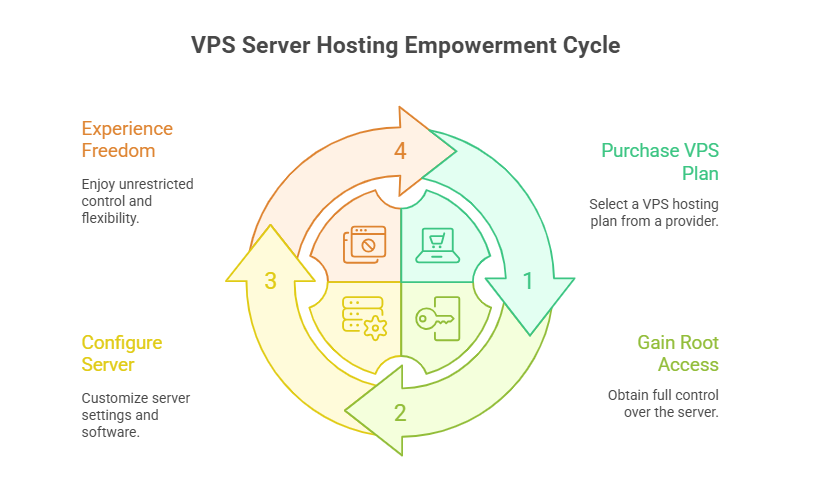
When customers tell us they’d rather “just buy VPS server hosting,” here’s what they usually mean:
- You pay for a server VPS plan with a provider like DigitalOcean, AWS, or any budget VPS seller.
- You log into the dashboard, and boom, you’ve got root access. That means you can install WordPress, configure Apache or Nginx, set up caching for WordPress, set up PHP, and manage databases.
- It feels empowering, especially if you’ve been burned by shared WordPress hosting before. Compared to that, VPS server hosting feels like leveling up: faster speeds, fewer restrictions, and the promise of scaling if your site grows.
- Root access = full control. You can pick your web server (Nginx, Apache), your PHP version, your caching layers, and even install software outside of WordPress.
- Feels like freedom. For developers, having server VPS access means no restrictions from a hosting company. You’re the one calling the shots.
That’s why VPS server hosting gets marketed as the best VPS server choice. It’s affordable, flexible, and puts you in control. You can run multiple sites, install whatever you want, and even resell capacity if you’re running an agency.
That’s the sales pitch. But when we talk to agencies and freelancers who went down this path, the other half of the story comes up.
- Setup isn’t as simple as it looks. You don’t just “click to launch WordPress.” You have to install and configure everything: web server, PHP version, SSL certificates, caching layers, and more. For someone comfortable with Linux, maybe that’s fine. But for agencies trying to move fast, it’s extra hours.
- Performance is your problem. A raw VPS server doesn’t come pre-tuned for WordPress. If your WooCommerce store slows down on checkout, or your blog spikes with traffic, it’s on you to optimize MariaDB queries, configure Redis, or tweak PHP workers.
- Security isn’t built in. Firewalls, DDoS protection, bot filtering, malware scanning; all things you need to add yourself. Usually, that means stacking services like Cloudflare, Fail2Ban, and ModSecurity on top of your VPS server. Each one is another config file, another dashboard, another bill.
- Scaling is manual. When traffic grows, you can’t just “turn a dial.” You have to resize the server, change configs, and maybe move databases to a different volume. Worst of all, sometimes that means downtime while DNS propagates.
- Staging is painful. Want to clone your site to test a plugin update? On a VPS server, staging usually means creating another VM, setting up the same stack again, copying databases and files. That’s why many tell us it feels like “rebuilding the house just to repaint the kitchen.”
- You become the sysadmin. At the end of the day, the VPS server doesn’t manage itself. Kernel patches, PHP updates, SSL renewals, database backups, intrusion prevention; every little thing that goes wrong, you’re the one logging in to fix it.
- Support has limits. Most VPS providers give you infrastructure support, not WordPress support. If your database crashes or a plugin breaks your site, they’ll often tell you it’s outside their scope.
This is the hidden cost of “just buy a VPS server hosting.” Yes, you can get a cloud VPS server for a few dollars a month. But the moment you want WordPress sites that are fast, secure, and reliable, you start stacking tools, plugins, and services. Suddenly, your “cheap VPS” costs more in time, money, and stress than managed WordPress hosting ever would.
From the outside, a VPS server cloud looks like the best of both worlds: cheap, flexible, and powerful. From the inside, agencies often tell us it feels more like babysitting: constant patching, troubleshooting, and juggling services just to keep a WordPress site stable.
This Is Why We Suggest Using InstaWP
At InstaWP, we believe in offering the best possible solution to our users, no matter what. That’s why we don’t lock anyone in; we provide our own managed WordPress hosting, but we also give customers the flexibility to host with our partnered providers if they prefer. The choice is always in the hands of our users.
But when someone says that running WordPress on a VPS is a better option than using our hosting, that’s where we need to be clear. A VPS server might sound powerful and cost-effective at first glance, but it is not the right option for most agencies, developers, or businesses that want speed, simplicity, and security without extra overhead.
Here’s why:
- A VPS server is just a server. You are responsible for setting up caching, firewalls, backups, and optimizations. InstaWP hosting already includes all of this out of the box.
- A VPS server makes you the sysadmin. Every patch, every update, every performance tweak is on you. With InstaWP, the infrastructure is managed and tuned for WordPress, so you don’t have to touch server configs.
- A VPS server hosting does not scale seamlessly. Resizing often means downtime and manual reconfiguration. With InstaWP, scaling is instant and requires no DNS changes.
- A VPS server hosting does not give you instant staging or sandboxes. With InstaWP, you can clone a site in seconds and test changes safely without spinning up new servers.
So while we respect the idea of VPS hosting, we’ve built InstaWP hosting to give you something better: a WordPress-native cloud environment that removes the complexity of managing servers and lets you focus on building sites.
When you compare InstaWP hosting with a VPS server hosting, the real difference shows up in day-to-day use. A VPS server can run WordPress, but it leaves you to manage the heavy lifting. InstaWP, on the other hand, gives you an environment designed for WordPress from the start.
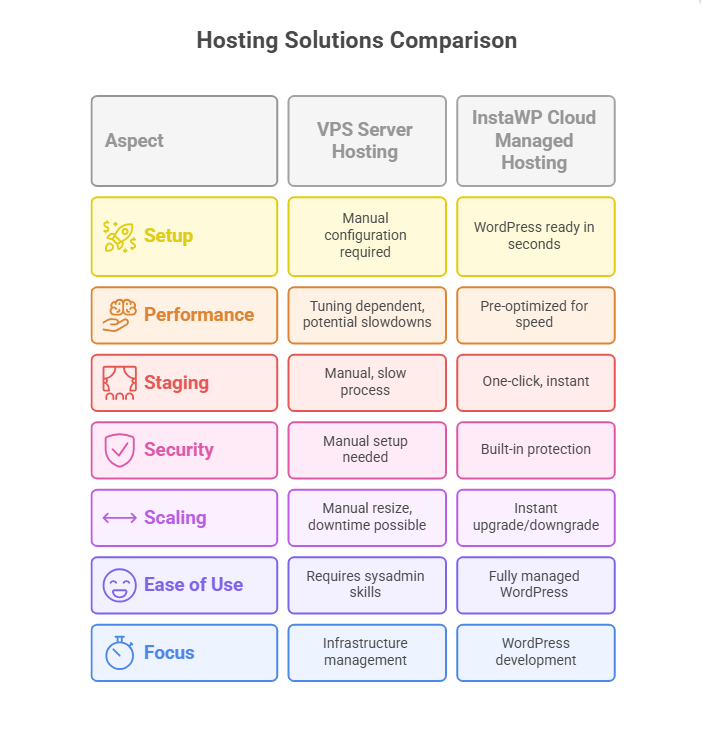
Here’s what that means for you as an end user:
- Time Saved on Setup: With a VPS server, you spend hours installing PHP, configuring Apache or Nginx, setting up caching, adding SSL, and securing the server. With InstaWP, you can create WordPress sites in seconds with everything preconfigured.
- Performance Without Tuning: VPS server performance depends on your skills as a sysadmin. If you miss database tuning or caching layers, your site slows down. InstaWP hosting runs on NVMe SSDs, optimized MariaDB, and hybrid Nginx + Apache; all tuned out of the box.
- Built-In Security: On a VPS, you need extra services like Cloudflare or Sucuri for DDoS protection, bot filtering, and firewalls. InstaWP includes Security Shield by default, protecting your sites at the edge before attacks even hit your server.
- One-Click Staging and Sandboxes: Cloning a site on a VPS means creating another server, copying databases, and re-configuring everything. With InstaWP, staging and WordPress sandbox sites are spun up instantly with a single click.
- Stress-Free Scaling: When traffic grows, a VPS server must be resized manually. That often means downtime and DNS updates. With InstaWP hosting, scaling is instant; upgrade or downgrade site plans without disruption.
- Focus on WordPress, Not Servers: The biggest gain is freedom. Instead of logging into a VPS and troubleshooting configs, you can spend time building sites, testing plugins, or managing clients. The infrastructure runs silently in the background.
That’s why, when customers tell us they’re considering a VPS instead of InstaWP hosting, we explain it this way: a VPS server hosting gives you control, but InstaWP gives you speed, security, and ease. Most agencies and developers care more about results than server babysitting, and that’s exactly what InstaWP is built for.
For Your Understanding, We Compared InstaWP Cloud Managed Hosting with xCloud
Since this question comes up often, we didn’t just stop at explaining VPS vs InstaWP. For your understanding, we also tried comparing InstaWP’s managed cloud hosting with xCloud, a platform that lets you connect your own VPS servers and manage WordPress from there.
xCloud looks appealing. It gives you one-click deployments, staging tools, and integrates with cloud providers like AWS, Google Cloud, and DigitalOcean. It feels like you’re getting the best of both worlds: your own VPS with a management layer on top.
But when we tested it ourselves, here’s what we found:
- Staging is slow: xCloud staging essentially reprovisions a VPS, which takes several minutes. In contrast, InstaWP staging or sandbox sites are created in seconds.
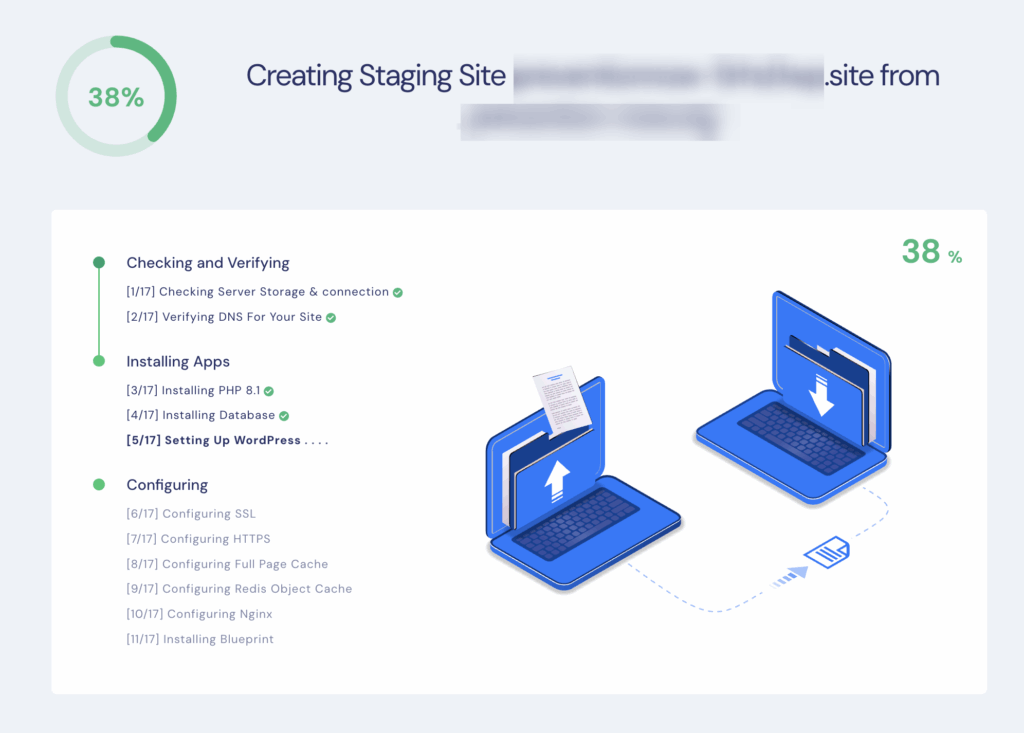
- Performance depends on your server: With xCloud, your site’s speed is only as good as the VPS you attach. With InstaWP WordPress cloud hosting, you’re always running on an optimized stack: hybrid Nginx + Apache, MariaDB on NVMe SSDs, BunnyCDN, and Bunny Shield.
- Security is not baked in: You still have to configure firewalls and edge security depending on your VPS setup. InstaWP includes enterprise-grade WAF, DDoS, and bot protection by default.
- Scaling is manual: With xCloud, if your VPS runs out of resources, you have to resize and reconfigure. With InstaWP hosting, scaling happens instantly without downtime.
So while xCloud improves on plain VPS hosting, it still inherits the same limitations: slow staging, server dependency, and manual scaling. With InstaWP cloud WordPress hosting, you skip those trade-offs and get a hosting experience that is already built for agencies and developers who need speed and reliability.
Do You Really Need InstaWP Hosting If You Already Have a VPS?
If your goal is to play sysadmin, then a VPS can work. You get control, but with that comes the responsibility of configuring servers, managing updates, securing traffic, and troubleshooting when things break. It is powerful, but it is also time-consuming and risky if WordPress performance is business-critical.
At InstaWP, we’ve built our cloud WordPress hosting because most agencies and developers told us the same thing: they don’t want to babysit servers, they want sites that just work. With InstaWP, you get global speed, enterprise-grade security, instant staging, and seamless scaling; all without lifting a finger on server configs.
So, do you really need InstaWP hosting if you already have a VPS? The short answer is yes, if you value speed, simplicity, and focus. A VPS is just a server. InstaWP is WordPress hosting that removes the friction and lets you spend time building, testing, and launching, not patching.