Looking for a reliable HostGator alternative for your agency in 2026 is not just about “faster hosting.” It is about escaping long-term contracts, manual migrations, fragile cPanel staging, and support that slows you down when a client site is on fire.
Agencies running dozens of WordPress installs need hosting that treats staging, backups, and migrations as part of the product, not paid add-ons bolted to shared servers.
This guide ranks the 10 best HostGator alternatives for agencies.ach option is evaluated on what actually matters for WordPress agencies: one click or guided migrations from HostGator, real staging environments, performance under load, transparent pricing, and tools to manage many client sites from a single view.
By the end, you will know exactly which HostGator alternative fits your current clients, your stack, and your growth plans.
Table of Contents
Best HostGator Alternatives
?InstaWP – Best HostGator alternative for WordPress agencies that want one-click staging, sandboxes, one-click migrations, and central site management designed around agency workflows.
?SiteGround – HostGator alternative for agencies that care about strong performance, daily backups, and built in WordPress staging with responsive support.
?Cloudways – Best for agencies that prefer pay-as-you-go managed cloud hosting on top of AWS, Google Cloud, or DigitalOcean without dealing with raw servers.
4. Kinsta – Best premium HostGator alternative for high traffic WordPress and WooCommerce sites that need container-based isolation, free migrations, and a strict uptime guarantee.
5. WP Engine – Best fit for agencies that want managed WordPress hosting with per site pricing, white label friendly tools, and an ecosystem of agency programs.
6. Hostinger – Best budget friendly HostGator alternative that still offers managed WordPress features, daily backups, and staging environments on popular plans.
7. CloudPress – Best for small dev teams that want opinionated managed WordPress hosting with automated updates and minimal manual server work.
8. Bluehost – Best alternative if your agency also onboards beginners and wants a familiar, mainstream host with simple WordPress setup and phone support.
9. A2 Hosting – HostGator alternative for resellers and performance focused agencies that need turbo servers, white label options, and flexible reseller packages.
10. GoDaddy – Best choice when clients are already inside the GoDaddy ecosystem and you want domains, email, and hosting under a single login while you plan a longer-term move.
Best HostGator Alternatives
Here are some of the best HostGator alternatives that you can try without any fear, and to have the best ROIs.
1. InstaWP – Best HostGator Alternative For WordPress Agencies In 2026
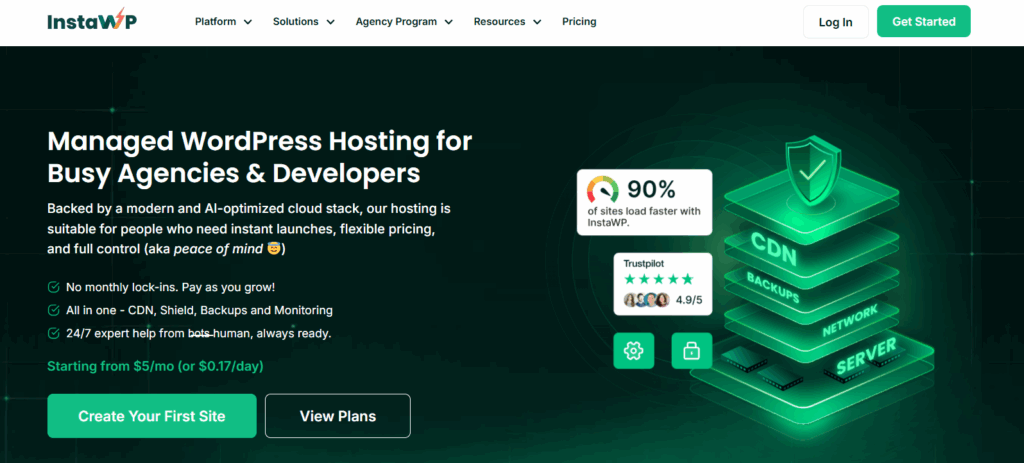
InstaWP is a cloud native WordPress platform built around how agencies actually work. Instead of juggling separate tools for staging, sandboxes, and hosting like you do on HostGator, you get everything in one place. You spin up sites in seconds, test them in isolated sandboxes, then move the ones that matter to fast, production-ready cloud hosting on the same platform.
For agencies coming from HostGator, the biggest win is how predictable the workflow becomes. You can pull a copy of a HostGator site into an InstaWP sandbox, run through updates, redesigns, and performance fixes, then promote that tested version to live hosting without redoing the work.
No riskier cPanel clones, no more hoping that a manual migration plugin does not time out in the middle of a client launch. You treat migrations as a repeatable process, not a fire drill.
InstaWP’s native cloud hosting emerges as the best HostGator alternative, specifically designed for agencies seeking efficient and reliable managed hosting solutions. As an alternative to HostGator, InstaWP focuses on seamless hosting migration and optimized performance, transforming how agencies manage their WordPress sites.
Why InstaWP Is The Best HostGator Alternative For WordPress Agencies
- Cloud native WordPress platform that combines sandboxes, WordPress staging, and hosting in one place instead of separate HostGator accounts, cPanel, and third-party tools.
- Built around agency workflows: spin up instant demo sites, share links with clients, then promote the approved version to managed cloud hosting without rebuilding the site.
- Modern performance stack tuned for WordPress with caching, CDN, and backups treated as defaults, not paid add ons bolted on top of generic shared hosting.
- Central site management dashboard that lets agencies see all client sites, use magic login, run bulk plugin and theme updates, and monitor performance and vulnerabilities in one view.
- Safer experimentation with snapshots and disposable sandboxes so designers and developers can test updates, new plugins, or redesigns without touching live client sites.
- Pricing and plans designed to match agency realities (multiple sites, varying traffic, changing lineups) instead of locking each project into long term shared hosting contracts.
Who Should Choose InstaWP Instead Of HostGator
InstaWP is a strong HostGator alternative for agencies, freelancers and product teams that handle multiple WordPress sites and cannot afford fragile hosting.
It fits especially well if you already use local or browser-based sandboxes for development and want hosting to live in the same ecosystem. If you are tired of juggling separate staging, hosting and migration tools on HostGator, moving those workflows into InstaWP will simplify your day-to-day work.
2. SiteGround
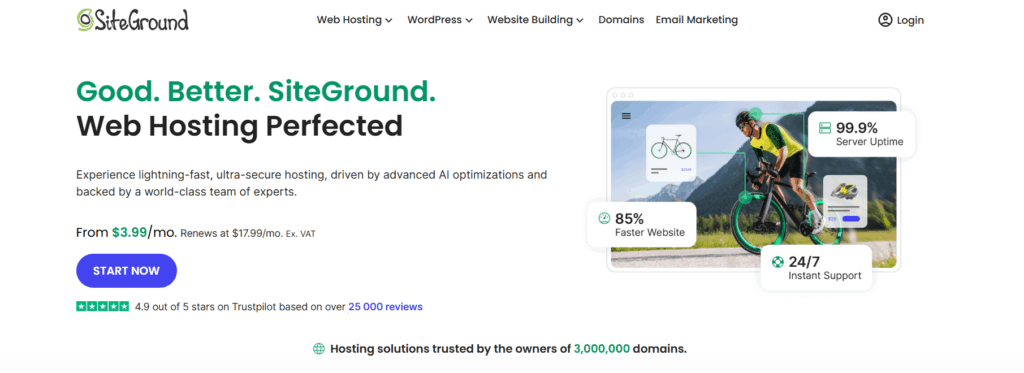
SiteGround is one of the best HostGator alternatives for agencies that care about performance, support quality, and stable managed WordPress hosting. Instead of generic shared servers with basic tooling, you get a stack built on Google Cloud, aggressive caching, daily backups, and WP staging environments that are ready for real client work.
For agencies that are constantly launching campaigns and WooCommerce sites, that extra stability and speed is what keeps support tickets under control.
For teams coming from HostGator, SiteGround’s biggest advantage is the combination of managed WordPress hosting and predictable tooling.
You can use their free migrator or expert migration service to move sites across, then lean on built in Speed Optimizer and Security Optimizer plugins to squeeze better performance and security out of the same codebase. You still get a familiar “control panel” style interface, but you are not fighting cPanel on every change, and you are not guessing whether backups or staging are really there when you need them.
Why SiteGround Is One Of The Best HostGator Alternatives For WordPress Agencies
- Managed WordPress hosting stack built on Google Cloud infrastructure with integrated caching, CDN and ultrafast PHP, which usually delivers better real world performance than HostGator’s traditional shared hosting stack.
- Native WordPress features such as auto install, automated migrations, automatic core and plugin updates and AI assisted optimization, which reduce the amount of manual server work agencies have to do for each client site.
- Built in staging environments on GrowBig and GoGeek plans, so agencies can test updates, redesigns, and new plugins on a staging copy first, instead of cloning sites manually like on HostGator.
- Daily automated backups with up to 30 copies kept in separate data centers, plus on demand backups on higher plans, which gives agencies a quick rollback plan when a deployment or plugin update goes wrong.
- Strong security posture with smart firewall rules, WordPress security plugin, automatic updates and AI powered protection for malicious traffic, so agency teams spend less time firefighting hacked sites than they would on lower tier shared hosting.
- Site Tools interface that replaces cPanel with a cleaner, more focused dashboard, making it easier for agency developers and account managers to manage domains, email, DNS, and site tools without digging through cluttered menus.
- Trusted brand with millions of domains and consistently high ratings on platforms like Trustpilot, which helps agencies justify “we are moving you from HostGator to a more premium managed WordPress hosting provider” in client conversations.
Who Should Choose SiteGround Instead of HostGator
SiteGround is a strong HostGator alternative if your agency wants a more premium, performance oriented managed WordPress hosting provider but still prefers a conventional hosting panel over a dev first platform.
It is a good fit for teams running a mix of marketing sites and WooCommerce stores that need reliable uptime, daily backups and real staging, plus fast access to expert support whenever something at the hosting layer misbehaves.
If you regularly find yourself pushing HostGator’s shared hosting limits and opening tickets for slow sites, moving those projects to SiteGround will usually give you a more stable base to build on while still keeping the workflow familiar for your team.
3. Cloudways
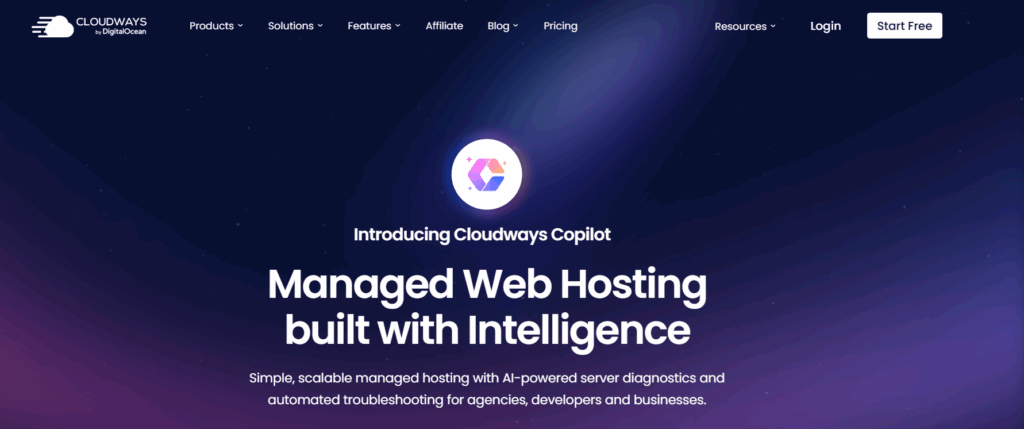
Cloudways is one of the best HostGator alternatives for agencies that want flexible, managed WordPress hosting without being locked into traditional shared servers.
Instead of renting space on a generic HostGator shared plan, you launch managed servers on top of cloud providers like DigitalOcean, Vultr, Linode, AWS, or Google Cloud and let Cloudways handle the stack, security, and updates for you. For agencies that outgrow basic shared hosting but do not want to hire a full-time sysadmin, this “managed cloud” model hits a very practical middle ground.
For agencies coming from HostGator, the biggest shift is control and scalability. You can move a WordPress site to Cloudways with their migrator plugin or guided migration, then scale the underlying server vertically when campaigns spike instead of scrambling to upgrade a shared plan.
Staging, backups, and server monitoring live in the same panel, so your team can test changes, clone environments, or restore a backup without touching raw cloud dashboards. You still get managed WordPress hosting, but you choose where it runs and how powerful it needs to be for each client.
Why Cloudways Is One Of The Best HostGator Alternatives For WordPress Agencies
- Managed cloud and managed WordPress hosting platform that runs on top of leading providers such as DigitalOcean, Vultr, Linode, AWS and Google Cloud so agencies are not tied to a single shared infrastructure the way they are on HostGator.
- Pay-as-you-go pricing with hourly or monthly billing, which often maps better to agency cash flow and variable client loads than long multiyear shared hosting contracts.
- Optimized ThunderStack that combines Nginx, Apache, PHP FPM, Redis, Memcached and Varnish for fast WordPress and WooCommerce performance, usually outperforming lower tier shared servers under real traffic.
- Built-in tooling that agencies actually need, such as one-click staging, server and app cloning, automated backups, vertical scaling, and safe updates, so change management is less fragile than on HostGator.
- Strong security posture with firewalls, SSL, Cloudflare integration, automatic patches, and AI-powered monitoring through features like Copilot, which keeps an eye on server health and flags issues before they become outages.
- Agency-oriented features such as client billing and reporting, multi-site management and 24/7 expert support, which make it easier to treat Cloudways as a long-term hosting partner rather than just “another control panel”.
Who Should Choose Cloudways Instead Of HostGator
Cloudways is a strong HostGator alternative for agencies and developers that manage many WordPress sites with uneven traffic patterns and want more power and flexibility than shared hosting can offer. It is a good fit if your team is comfortable choosing server sizes and regions, likes the idea of pay as you go managed WordPress hosting on top of real cloud providers and wants staging, backups and scaling to be part of the platform rather than a pile of plugins.
If HostGator feels too limited when clients start running serious campaigns or WooCommerce stores, moving those projects to Cloudways usually gives you more room to grow while still keeping day to day operations manageable for your team.
4. Kinsta

Kinsta is what agencies usually end up shortlisting when “cheap shared hosting” stops being good enough. If HostGator feels fine for small brochure sites but collapses under busy blogs or WooCommerce stores, Kinsta moves you into a different class of managed WordPress hosting where performance and uptime are treated as core features, not upsells.
Instead of stacking dozens of sites on the same shared box, each WordPress install lives inside its own container on top of Google Cloud’s premium machines.
That means noisy neighbors are not your problem, capacity is easier to predict, and support is looking at a platform designed only for WordPress rather than every script under the sun. For agencies with even one or two “do not ever go down” clients, that difference matters more than the headline price.
Why Kinsta Stands Out Among The Best HostGator Alternatives
- Everything in the stack is tuned for WordPress and WooCommerce. You get server-level caching, CDN, optimized PHP, and database settings out of the box, so you are not playing plugin roulette to get acceptable performance.
- Container based isolation instead of crowded shared servers
Each site runs in its own container with dedicated resources. Traffic spikes on one client do not drag another client’s site down, which is a common pain on oversold shared hosting. - Hands on migration help when leaving HostGator
Kinsta’s team will migrate qualifying WordPress sites for you. For an agency with a handful of key clients on HostGator, that removes a lot of stress compared to relying entirely on DIY migration plugins. - Staging and backup as everyday tools, not emergencies
Every site gets a staging environment and automatic daily backups. Agencies can treat staging as the default place to test code, layouts and updates, then push changes live once the client signs off. - Deep visibility into performance issues
MyKinsta includes analytics for response times, slow pages, cache effectiveness and resource usage. That gives your team real data to explain “why the site is slow” instead of guessing or blaming plugins. - Security posture that fits high value projects
Firewalls, uptime monitoring, malware scanning and hack fix guarantees are standard. For clients who pay serious retainers, being able to say “our host will help fix a compromised site” is a strong trust signal.
Who Should Pick Kinsta Instead Of HostGator
Kinsta makes sense for agencies that already know they are outgrowing entry level shared hosting and want premium managed WordPress hosting as part of their offer. Think busy content sites, WooCommerce stores, membership platforms or SaaS style marketing sites where every outage gets noticed.
If you are constantly throttled on HostGator, dealing with resource warnings or fighting to keep a handful of big clients online during campaigns, moving just those projects to Kinsta is often the cleanest way to stabilise them while keeping simpler sites on more budget friendly hosts.
5. WP Engine
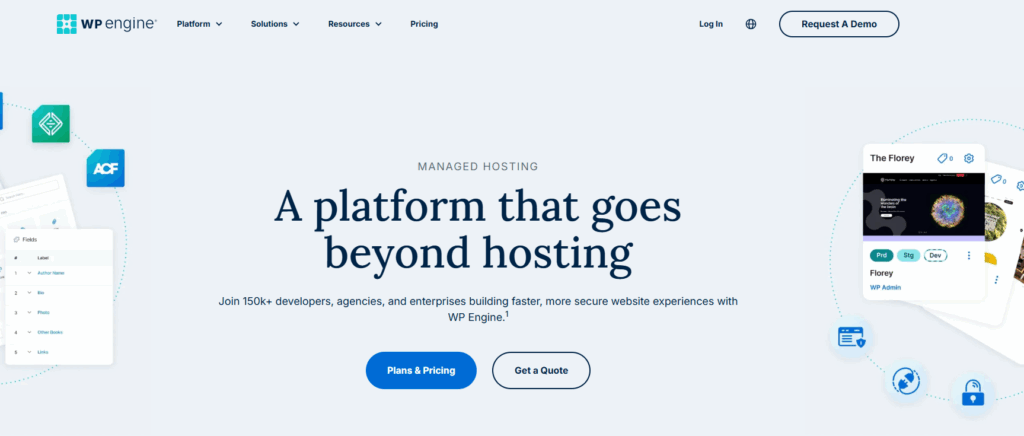
WP Engine is often the name that comes up when agencies ask for “a serious managed WordPress hosting option” instead of another shared HostGator account. It treats WordPress as a product in its own right, not just a script you install on a generic server.
The platform bundles performance tuning, security, backups and staging around WordPress, then wraps it in a control panel and support model that is clearly built for teams shipping client sites every week.
For an agency that has already hit the ceiling of low-cost shared hosting, WP Engine feels more like infrastructure you grow into than a quick upgrade. You move selected projects across, plug into their managed WordPress hosting features, and over time standardise how you deploy, test, and protect client sites.
Why WP Engine Is One of The Best HostGator Alternatives For WordPress Agencies
- Premium managed WordPress hosting that is built only for WordPress, so the entire stack, support and tooling are tuned for one CMS instead of trying to support everything on a generic shared server.
- Strong upgrade path from HostGator for higher value projects: you can move only your most important client sites to WP Engine and immediately benefit from faster page loads, better uptime and more predictable performance.
- Automatic daily backups plus easy restore points from the WP Engine panel, which removes the need for cPanel backups and third party backup plugins that many HostGator users depend on.
- Staging environments available for every install, giving agencies a defined place to test redesigns, plugin changes and core updates before they deploy to production.
- Platform level caching and global CDN integration designed specifically for WordPress, reducing the amount of performance tuning your team has to do with caching plugins on shared hosting.
- Security handled as part of the service: managed firewalls, malware scanning, SSL and hack remediation help agencies keep client sites clean without constantly firefighting compromises on low cost shared plans.
- WordPress fluent support teams who understand plugins, themes and typical WordPress issues, so debugging is faster and more productive than working with a generic HostGator support queue.
- An agency ready ecosystem with partner programs, documentation and examples for building retainers on top of managed WordPress hosting, making it easier to position “we host you on WP Engine” as a premium line item compared to standard shared hosting.
Who Should Choose WP Engine Instead Of HostGator
WP Engine makes sense for agencies that have a clear top tier of WordPress projects that need predictable performance and a more robust hosting story for clients. If you are maintaining content heavy blogs, membership sites, lead gen funnels or online stores where every outage triggers calls and Slack pings, this is the kind of managed WordPress hosting platform that takes pressure off your team.
It pairs well with a mixed strategy where smaller, low risk sites stay on budget hosts, while WP Engine becomes the home for the clients who expect premium handling and are willing to pay for it.
6. Hostinger
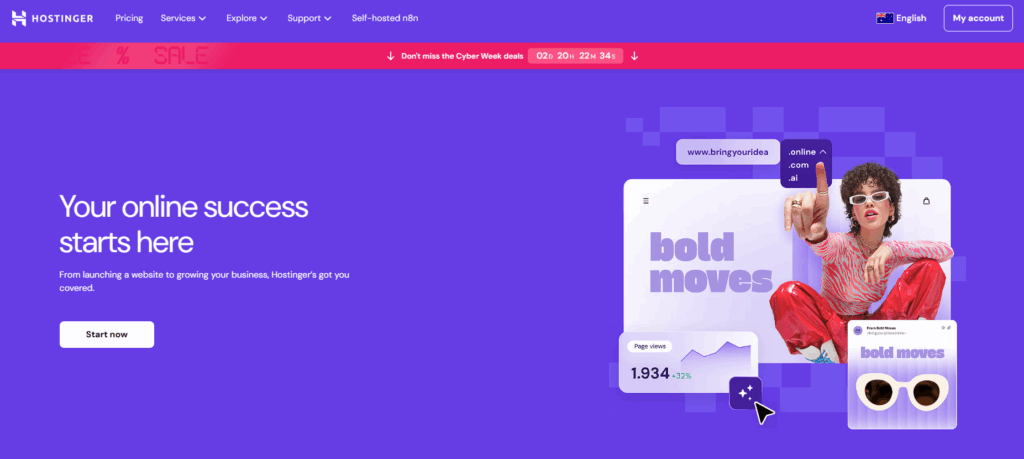
Hostinger is the budget-friendly name that actually deserves a place in any list of the best HostGator alternatives. Agencies that are stuck between “client will not pay for premium managed WordPress hosting yet” and “shared hosting keeps breaking” often land on Hostinger as a middle path.
You still get low entry prices and simple onboarding like HostGator, but the WordPress-specific features feel closer to a managed stack than a bare shared server.
For teams moving away from HostGator, the main difference is how much you get on WordPress plans without stacking extra plugins and paid add ons. Automatic backups, free SSL, basic performance tuning and WordPress staging on higher tiers are all built into the control panel.
You do not have to assemble backups, security and staging yourself on top of a cheap plan, which is usually where HostGator starts to hurt agencies that run more than a handful of sites.
Why Hostinger Is One Of The Best HostGator Alternatives For WordPress Agencies
- Hostinger’s managed WordPress hosting plans are priced aggressively but still include important basics like one click WordPress setup, automatic updates, SSL and built in caching, so you get something that behaves like managed WordPress hosting at a cost many HostGator users are comfortable with.
- Pricing is more transparent than the classic “cheap first term, expensive renewal” pattern many agencies associate with HostGator. You can see real renewal prices up front and structure maintenance or care plans around numbers that will not suddenly jump on clients.
- Higher tier WordPress plans include a staging environment directly inside the Hostinger panel, which means you can create a staging copy, test design changes or plugin updates, then sync to live, instead of cloning sites manually in cPanel the way you often do on HostGator.
- Backups are handled for you. Weekly backups are available on most plans and daily backups on Business and above, with simple restore options. That alone is a quality-of-life upgrade for agencies that have been relying on HostGator’s limited courtesy backups and extra backup products.
- The platform comes with WordPress specific performance helpers such as LiteSpeed or custom caching integrations and tuned PHP limits, so many small and mid-sized sites will load noticeably faster than they did on an overcrowded shared HostGator server, without a big optimization project.
- Developer friendly access via SSH, WP-CLI and an improved control panel makes it easier for agency developers to script updates, run search and replace, and debug issues, instead of being stuck inside only cPanel tools and basic file managers.
- As part of a ladder of best HostGator alternatives, Hostinger works well as the “value” tier. You can move clients off HostGator to a host that behaves more like managed WordPress hosting, without forcing every small site onto a premium platform like Kinsta or WP Engine from day one.
Who Should Choose Hostinger Instead Of HostGator
Hostinger is a good fit for agencies that are not ready to put every project on high end managed WordPress hosting, but know they have outgrown bargain shared hosting. It suits small and mid sized WordPress sites, local business sites and early stage projects where budgets are tight but you still want staging, backups and a cleaner WordPress experience than HostGator can offer.
If you are currently onboarding price-sensitive clients on HostGator only because “it is cheap and familiar”, shifting those accounts to Hostinger gives you a stronger technical story and fewer basic hosting headaches, while keeping monthly costs within a range most clients will accept.
6. CloudPress
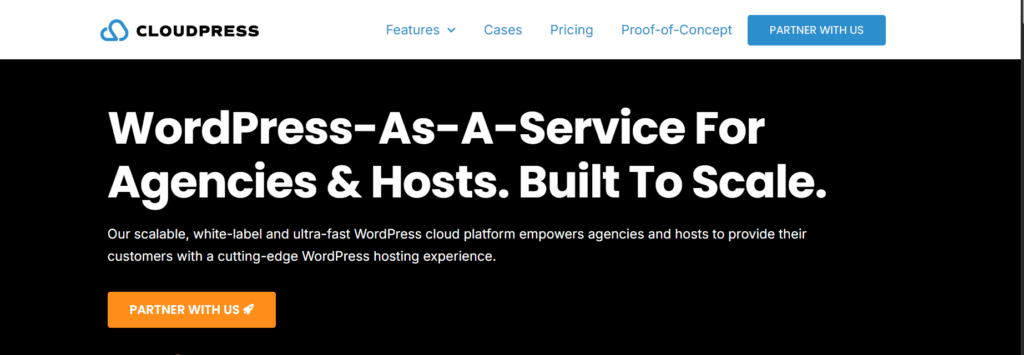
CloudPress is not just “another host” in the list of best HostGator alternatives. It positions itself as a WordPress-as-a-service platform for agencies and hosting companies, with a fully managed, white label WordPress cloud built on modern infrastructure.
Instead of renting a cheap shared cPanel account like HostGator and layering plugins on top, you plug into a purpose-built WordPress cloud that is meant to run thousands of client sites at scale.
For agencies coming from HostGator, the big difference is how CloudPress treats your business model. It is built for reselling, bundling and packaging managed WordPress hosting under your own brand, with performance, security and automation already handled at the platform level.
You are not fighting noisy neighbors and random server limits. You are deciding how to package your own WordPress offerings on top of a platform that already powers thousands of sites for hundreds of agencies.
Why CloudPress Is One Of The Best HostGator Alternatives For WordPress Agencies
- WordPress-as-a-service platform designed specifically for agencies and hosts, not solo bloggers, so the whole product is aligned with reselling, bundling and long-term client relationships rather than one off shared account.
- Fully managed WordPress hosting with a modern cloud stack, global CDN and aggressive caching, which usually delivers much more consistent performance than traditional shared HostGator plans when you start adding higher traffic sites.
- White label friendly environment where you can present hosting as your own service while CloudPress runs the underlying infrastructure, ideal if you want to move away from “we just park you on HostGator” and toward a branded managed WordPress hosting offer.
- Built with agencies in mind, with a track record of running WordPress hosting for thousands of sites and hundreds of digital agencies, which gives you confidence that the platform is tuned for multi-site portfolios, not just single installs.
- Performance and security tooling baked into the platform, including advanced caching, image optimisation and integrations with partners like Cloudflare Enterprise and Object Cache Pro, so you are not assembling a performance stack from scratch on top of a HostGator server.
- Scalable architecture that can grow with your agency, from a handful of client sites to hundreds, without you having to constantly upgrade or migrate away from overcrowded shared hosting as each site gains traction.
- A partnership model rather than a simple “buy hosting” checkout, so you can work with the CloudPress team on migrations, proof of concept sites and long-term plans, instead of feeling like one more ticket in a general support queue.
Who Should Choose CloudPress Instead Of HostGator
CloudPress is a strong HostGator alternative for agencies that want to turn hosting into a serious, branded service instead of an afterthought handled on cheap shared plans. It is a good fit if you manage many WordPress sites, want a white label managed WordPress hosting platform behind your own brand and care about having a cloud native stack that can handle growth without constant re-platforming.
If your agency is moving toward a WaaS or recurring revenue model and HostGator is starting to feel like a fragile foundation. CloudPress is the kind of partner-style platform that will support that shift much more comfortably.
8. Bluehost
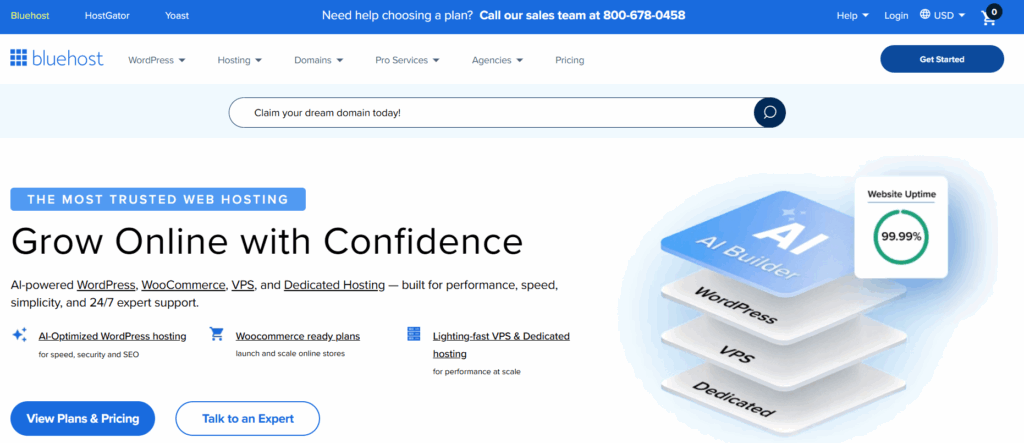
Bluehost is usually one of the first names agencies think of when they want a mainstream, client-friendly HostGator alternative.
It still sits in the “shared hosting” and “managed WordPress hosting” buckets, but the onboarding, dashboards and support are designed so non-technical clients do not feel lost. For agencies that manage small business or brochure sites and need something familiar for clients who have “seen Bluehost everywhere,” it can be a pragmatic step up from HostGator.
Where HostGator often feels like older cPanel with a fresh coat of paint, Bluehost leans harder into WordPress specific tooling. You get guided WordPress installs, built in performance helpers, and a more modern panel on top of the usual hosting controls.
For agencies that hand sites over to clients after launch, that mix of WordPress focus and recognisable branding can make support conversations easier.
Why Bluehost Is One Of The Best HostGator Alternatives For WordPress Agencies
- Strong fit for agencies that want a well known, beginner friendly host they can recommend without long explanations, while still being able to manage multiple installs from a single account more comfortably than on older HostGator setups.
- WordPress centric onboarding with one click installs, curated plugin suggestions and an interface that nudges users toward good defaults, so you spend less time fixing broken manual installs like you often do on cheaper shared hosting.
- Managed WordPress hosting plans that bundle automatic updates, CDN, basic security and performance features, giving you something closer to managed WordPress hosting without jumping straight to premium only platforms.
- Integrated staging on WordPress focused plans, letting agencies clone a site into a separate environment, test design tweaks or plugin updates, and then push those changes live without juggling manual cPanel copies.
- Daily backups and simple restore options on higher tiers, which is already an improvement over relying on courtesy backups or extra backup products the way many HostGator users still do.
- Access to phone and chat based support that a non technical client can comfortably use, so when you eventually hand off ownership, they are not stuck with a ticket only system they will avoid.
- Easy path for agencies building smaller sites or starter care plans to move clients off HostGator and onto a host that still feels “big and familiar,” while reserving more advanced managed WordPress hosting providers for higher value or high traffic projects.
Who Should Choose Bluehost Instead Of HostGator
Bluehost is a sensible HostGator alternative for agencies that handle a lot of small businesses, brochure or early-stage WordPress sites, and need a client-friendly, widely recognised provider. It works well when your priority is smooth onboarding, simple WordPress hosting, and support that clients are willing to contact themselves, rather than raw performance or enterprise features.
9. A2 Hosting
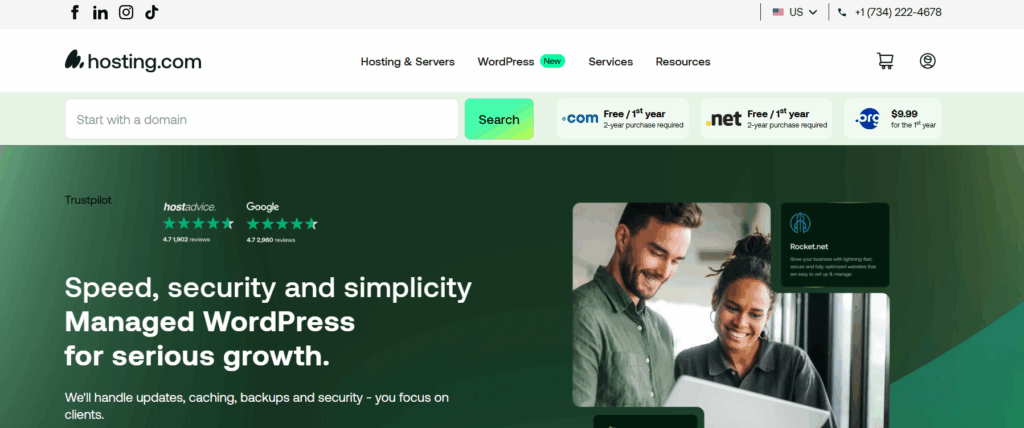
A2 Hosting is the “performance nerd” in the list of best HostGator alternatives. It still offers shared plans, but the focus is on speed, dev tools, and reseller hosting rather than just packing as many sites as possible onto one server.
For agencies that need something faster than bargain shared hosting, but still want cPanel, white label options, and flexible billing, A2 often feels like a more capable version of what they were trying to do on HostGator.
Where HostGator’s shared plans can start to feel sluggish as you add clients, A2’s Turbo plans, NVMe storage and tuned stack are built to squeeze more performance out of WordPress without forcing you straight into expensive managed WordPress hosting.
That makes it attractive for agencies that run care plans on a mix of small sites and busier blogs or WooCommerce stores and want a bit more headroom.
Why A2 Hosting Is One Of The Best HostGator Alternatives For WordPress Agencies
- Strong focus on speed, with Turbo servers, NVMe storage and an optimized stack that usually delivers quicker WordPress response times than typical low cost shared hosting, which helps agencies hit performance targets without deep custom optimisation.
- Shared, managed WordPress hosting and VPS options under one brand, so you can place different client sites at different levels without changing vendors every time a project grows beyond basic shared hosting.
- Reseller packages that are much better thought out than simply “resell shared accounts”, giving agencies a white label way to offer hosting on top of A2’s infrastructure instead of sending clients directly to HostGator.
- Developer friendly environment with cPanel, SSH, Git, WP-CLI and staging support on relevant plans, so your team can work with familiar tools and keep a smooth workflow while still moving away from HostGator’s more limited setup.
- Free site migration on many plans, which simplifies moving existing WordPress sites from HostGator to A2 without relying solely on manual backup/restore or one off migration plugins.
- Flexible configuration options (PHP versions, caching layers, resource allocations) that allow agencies to tune individual sites or accounts as they grow, rather than being stuck with a “one speed fits all” shared plan.
Who Should Choose A2 Hosting Instead Of HostGator
A2 Hosting is a solid HostGator alternative for agencies that still like the cPanel model and want control, but need better performance and a more serious reseller story. It works well if you have a mix of smaller client sites and a few heavier WordPress installs, want to keep everything under one provider and are comfortable managing hosting at the account level.
If HostGator feels slow, cramped or inflexible, but jumping straight to high end managed WordPress hosting for every project is not realistic yet, A2 is a good middle option that gives you more speed and tools without completely changing how your team works.
10. GoDaddy
GoDaddy shows up in almost every conversation about hosting for a simple reason. A lot of clients already have their domains, email, and billing there.
For agencies hunting for the best HostGator alternatives, GoDaddy is rarely the most exciting platform on a feature list, but it is often the most realistic choice when the goal is to bring some order to an existing GoDaddy heavy ecosystem without forcing clients into a completely new provider on day one.
Compared to HostGator, GoDaddy has a wider “all in one” feel. You can keep domains, DNS, email, and WordPress hosting under a single login, then layer managed WordPress hosting plans on top for sites that need automatic updates, basic backups, and WordPress tooling.
For agencies that inherit messy client setups, just getting everything into one GoDaddy account with predictable WordPress hosting can already be an upgrade over scattered HostGator accounts and random cPanel access.
Why GoDaddy Is One Of The Best HostGator Alternatives For WordPress Agencies
- Good choice for agencies that routinely inherit clients who already use GoDaddy for domains or email and do not want to switch provider immediately. You can standardize on GoDaddy managed WordPress hosting rather than juggling GoDaddy for domains and HostGator for hosting.
- Managed WordPress hosting plans that bundle automatic WordPress core updates, backups, security scans, and simple performance settings, which is more agency friendly than gluing these pieces together yourself on a basic HostGator shared plan.
- Single account to manage domains, DNS records, SSL, email, and WordPress hosting. This simplifies onboarding and ongoing support, especially when non technical clients need to log in and check something without getting lost in multiple control panels.
- Familiar brand that many small business owners already trust. When you recommend a move from HostGator to GoDaddy, you are rarely starting from zero explanation about who the provider is or whether they are “legit”.
- WordPress focused plans with staging on selected tiers, so you can spin up a staging copy of a site, test design changes or plugin updates, and then sync them back to live, instead of copying sites manually through cPanel like you often do on older HostGator setups.
- Integrated support for email and productivity tools, which helps agencies that want to tidy up “everything around the website” as part of a project rather than only shifting the hosting.
- A practical rung in a tiered hosting strategy. You can treat GoDaddy managed WordPress hosting as a step up from HostGator for simpler sites, while still moving your highest value or highest traffic projects to more specialised managed WordPress hosting platforms.
Who Should Choose GoDaddy Instead Of HostGator
GoDaddy makes sense for agencies that live in the real world, where many clients already use GoDaddy for their domain or email and push back when you suggest a full move to a niche provider. If you want to clean up scattered HostGator accounts, get basic managed WordPress hosting in place, and consolidate domains, DNS, and sites under a single login that clients recognise, GoDaddy can be a pragmatic HostGator alternative.
It is not the most advanced managed WordPress hosting in your toolbox, but it is often the easiest upgrade path when your main priority is reducing chaos and creating a clearer hosting story before you introduce more premium platforms for your most demanding projects.
Features Agencies Should Look for In HostGator Alternatives In 2026
When an agency moves away from HostGator in 2026, it is not just swapping one server for another. You are choosing a partner that affects every client delivery, launch date, and emergency ticket. These are the features you should treat as non-negotiable.
1. Frictionless WordPress migration from HostGator
Look for hosts that offer guided or automated WordPress migrations from HostGator.
Ideally you connect your existing site, let the tool pull a full copy, and rehearse the move before you touch DNS. Platforms like InstaWP make this easier. You can clone a HostGator site into a sandbox, test it under real conditions, and only then promote it to live hosting.
2. Real staging environments, not fragile clones
Agencies need proper staging for every serious site. That means one-click staging from production, a safe place to test plugin updates and redesigns, and a simple way to sync changes back.
If a host only offers manual copies in cPanel, treat that as a red flag. A strong HostGator alternative treats staging as a first-class feature, the way tools like InstaWP do with sandboxes and live environments living side by side.
3. Daily backups with quick, self service restore
You should not open a support ticket to restore yesterday’s version of a client site.
A good HostGator alternative takes automatic backups daily (or more often) and lets you restore from a calendar or snapshot list with a couple of clicks. Agencies that manage many sites will save hours when they can roll back bad updates on their own instead of waiting for a support queue.
4. Performance that holds up under campaign traffic
HostGator’s shared hosting often slows down when a campaign hits real traffic. An alternative for agencies needs a modern stack.
Think SSD or NVMe storage, built in caching, HTTP/2 or HTTP/3, a global CDN, and data centers that match your client regions. When you test hosts using staging sites or InstaWP sandboxes, pay attention to time to first byte and real page load times under load, not only synthetic speed scores.
5. Transparent, agency friendly pricing
The classic HostGator pattern is low intro prices that jump on renewal and long term contracts that lock you in.
In 2025, agencies should prefer hosts that show clear renewal pricing, honest limitations, and flexible plans that can scale up or down per site. Pay as you go models or per site billing often map better to how agencies sell retainers and care plans.
6. Built in security and uptime guarantees
Security should not be a bundle of add ons you have to remember to toggle. Look for free SSL certificates, firewalls, malware scanning, basic DDoS protection, and clean isolation between sites. On top of that, uptime SLAs and real status pages matter. When a client site goes down, you need to know whether the issue is on your side or the host, fast.
7. Tools to manage many WordPress sites from one place
This is where generic shared hosting breaks down for agencies. You need a single pane of glass for multiple WordPress installs.
Features like centralized login, bulk plugin and theme updates, performance and vulnerability scanners, uptime monitoring, and maintenance reports let you manage a portfolio instead of juggling dozens of separate cPanel accounts. InstaWP leans into this idea with site management tools designed for agencies rather than one off site owners.
8. Developer friendly access and automation
Your team and your contractors will need SSH access, WP CLI, SFTP, staging to live workflows, and support for modern tools like Git deployments or CI pipelines.
A strong HostGator alternative will not hide the stack behind a locked down panel. It will give you the hooks you need to automate deployments, run search and replace, or use AI assisted tooling on top of WordPress, all within a safe environment.
9. Responsive, technically capable support
Agencies do not have time to explain basic WordPress concepts every time something breaks at the hosting layer. When you evaluate HostGator alternatives, check support channels and response quality. Look for teams that understand WordPress, can read logs, and help you debug tricky performance or error issues instead of only reading from scripts.
10. A migration and staging workflow that fits how your agency works
The last feature is not a single checkbox. It is the overall workflow. The best HostGator alternative for agencies lets you experiment in sandboxes, test on staging, and then move sites into stable hosting without redoing work.
If you already prototype sites in InstaWP, it makes sense to keep hosting and staging there too, so your devs, designers, and project managers are all working in the same environment instead of bouncing between multiple dashboards.
This checklist helps you evaluate any HostGator alternative through an agency lens. If a provider scores poorly on migration, staging, or multi-site management, it might work for solo site owners but will quickly hold your agency back.
Choosing the Best HostGator Alternative for Your Agency
Selecting the best HostGator alternative is crucial for agencies aiming for smooth hosting migration and robust managed hosting solutions. Alternatives like InstaWP, SiteGround, and Bluehost offer superior support and functionality tailored to agency needs.
Evaluate these options based on your agency’s specific requirements to ensure a successful transition and optimal performance.
FAQs
What is the best HostGator alternative for WordPress agencies in 2026?
There is no single winner for every agency, but InstaWP is usually the best HostGator alternative if you want a cloud native platform that combines sandboxes, staging, and production hosting in one place. It gives you instant WordPress environments, safe testing, and managed hosting on the same platform.
Do I really need managed WordPress hosting, or can I stay on shared hosting like HostGator?
Shared hosting can still work for very small or low-traffic sites, but once you manage multiple client projects, the lack of reliable staging, limited backups, noisy neighbors, and slower support starts to cost you time and money. Managed WordPress hosting or a cloud native platform, such as InstaWP, handles backups, updates, staging, and performance for you so your team can ship work instead of babysitting servers. Most agencies end up using a mix: budget hosting for simple sites and managed WordPress hosting for anything that matters.
How do I migrate a WordPress site from HostGator to another host safely?
The safest approach is to clone the site into a separate environment, test it thoroughly, then switch DNS only when you are happy. With InstaWP, you can pull a copy of a HostGator site into a sandbox, fix issues, test forms and checkout flows, then promote it to production hosting. Most managed WordPress hosting providers also offer migration plugins or expert migration services. The key is to avoid “live surgery” on the HostGator server and treat every move as a rehearsed process, not a one-time gamble.
Can I move only some clients away from HostGator and keep others there?
Yes. Many agencies use a tiered approach. Small brochure sites or low-priority projects stay on HostGator or another budget host, while important or high-traffic sites go to managed WordPress hosting or a cloud native platform. You can move your most fragile or valuable clients first, for example, to InstaWP, and then shift remaining sites gradually as contracts renew or budgets allow. Search engines and users care about performance and uptime per site, not whether your entire portfolio uses a single provider.
What should I look for when choosing among the best HostGator alternatives?
For agencies, the checklist is different from a solo blogger. You should prioritise frictionless WordPress migrations, real staging environments, automatic backups with fast restores, a modern performance stack, and tools that let you manage many sites from one place. Developer access via SSH and WP CLI, role-based access for your team, and honest renewal pricing matter too. Platforms like InstaWP add an extra layer by combining sandboxes, staging, and hosting, which simplifies your entire workflow from first demo to long-term care plans.


