Every website you visit is burning electricity.
Behind the clean interface and sleek animations, data is flying across continents, powering servers, lighting up data centers, and leaving behind a trail of carbon emissions. The internet feels weightless, but its carbon footprint is anything but invisible.
The web now contributes to 3.7% of global greenhouse gas emissions, about the same as the entire aviation industry. Every click, image, video, and plugin loads with an environmental cost. And as billions of users spend more time online, that cost is only rising.
Here’s the twist: the power to reduce that impact lies in our code.
Developers, designers, and agencies have a unique opportunity to build faster, cleaner, and more energy-efficient websites without sacrificing performance or user experience. By optimizing what we build and how we host it, we can dramatically reduce our digital pollution.
In this guide, we’ll show you sustainable web development practices to reduce your carbon footprint while improving speed, UX, and cost efficiency. The best part? If you’re using platforms like InstaWP, you might already be doing your part, without even realizing it.
Table of Contents
What Is Sustainable Web Development?
Sustainable web development refers to building websites and web applications in a way that reduces their environmental impact. This includes using less energy during site visits, relying on cleaner infrastructure, and optimizing code and assets to run more efficiently.
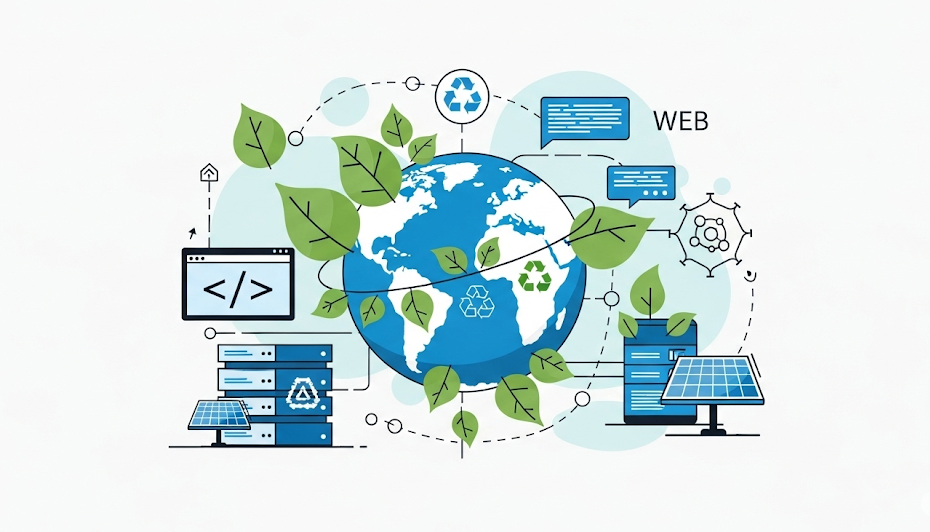
To understand how websites contribute to emissions, it’s helpful to break down the two main types:
1. Operational Emissions
These come from the energy required to host, load, and interact with a website. Every time a user visits a page, the server sends data, the browser renders the content, and energy is consumed across multiple layers of the internet. High-resolution images, uncompressed code, and autoplay videos all increase these emissions.
2. Embodied Emissions
These refer to the carbon cost of the hardware, servers, and infrastructure used to build, host, and maintain websites. Provisioning full-stack servers that remain idle, running unnecessary staging environments, and using power-hungry data centers all contribute to embodied emissions.
The encouraging news is that developers can directly influence both types. Smart coding, lightweight assets, scalable hosting, and container-based infrastructure reduce operational emissions. Choosing green data centers and eliminating redundant environments helps cut embodied emissions.
What Makes a Website Environmentally Harmful?
While a single web page may seem insignificant, the cumulative impact of millions of websites visited billions of times per day creates a serious environmental burden. A poorly optimized website consumes more server resources, more electricity, and emits more CO₂ with every page load.
Here are the main contributors to a website’s carbon footprint:
1. Overuse of High-Resolution Images and Autoplay Videos
Large images and videos increase page weight dramatically. If not compressed or properly formatted, they strain both servers and user devices. Autoplay videos load instantly, whether the user watches them or not, wasting bandwidth and power.
2. Inefficient Code
Bloated JavaScript, unnecessary CSS frameworks, and unused functions make websites heavier than they need to be. Every extra line of unoptimized code increases the time and energy needed to render a page.
3. Redundant Tracking Scripts
Multiple analytics tools, ad trackers, and retargeting scripts add third-party requests and slow down the site. These scripts require energy to load, process, and store data, all of which increases emissions.
4. Idle Infrastructure
Many developers rely on full server stacks, staging sites, and legacy environments that run 24/7. These idle resources still draw power even when not in active use.
5. Non-Renewable Hosting
Traditional data centers often rely on fossil fuels. Hosting your site with a provider that lacks renewable energy commitments contributes to carbon-heavy operations.
6. Poor Navigation and User Journeys
Do you know that a complex website can emit up to 300 milligrams of CO₂ per second per user?
Multiply that by thousands of daily visits, and the environmental impact becomes hard to ignore.
The more clicks it takes for users to complete an action, the more pages they load. Long user journeys mean more server requests, more data transferred, and more emissions per session.
By addressing these common pitfalls, developers can dramatically reduce their websites’ carbon output without compromising user experience or design flexibility.
10 Ways to Make Your Website Sustainable (for Developers)
If you want to make sure that your website isn’t silently killing the environment, adopt these practices immediately.
1. Set Up Web Caching
Caching is one of the most impactful sustainable web development practices to reduce the carbon footprint. When a user visits your website, the server typically processes multiple requests—loading stylesheets, executing scripts, and rendering content dynamically. This happens repeatedly for every visitor, consuming CPU power and energy each time.
Web caching changes that. It stores static versions of your web pages so that repeat visitors or even different users can load the page much faster without reprocessing the same data. This reduces electricity usage on both the server side and the user’s device.
At scale, caching dramatically lowers the energy demands of high-traffic sites. Faster sites also mean lower bounce rates, better user experience, and improved SEO. Caching isn’t just about speed; it’s about efficiency and sustainability.
So, you should set up caching on your site the moment development is finished. Agencies building and managing multiple client sites can make the process a little more streamlined by creating site templates featuring the best cache plugins, such as WP Super Cache plugins pre-installed, so users can activate caching with minimal setup.
There’s no need to configure server-level cache separately—InstaWP’s container-based environments are already optimized for speed and efficient resource use. This lets you follow sustainable web development practices without technical complexity or extra plugins.
2. Use the Right Hosting
One of the most important sustainable web development practices to reduce the carbon footprint is choosing the right hosting provider. Traditional web hosting often relies on large data centers powered by fossil fuels. These data centers require constant electricity to keep servers running and cool, resulting in high greenhouse gas emissions.
You should choose a hosting that is designed for performance and sustainability. For instance, InstaWP’s hosting. Behind the scenes, InstaWP uses a container-based architecture instead of full virtual machines, which leads to more efficient resource usage.
More importantly, InstaWP’s infrastructure is backed by Google Cloud Platform, which matches 100% of its energy consumption with renewable energy. That means every site you create on InstaWP is supported by a green hosting layer without requiring any extra setup.
By simply choosing InstaWP for your dev workflow, you’re already making a measurable contribution toward a lower-carbon web.
3. Optimize Images and Use Next-Gen Formats
Images account for a large portion of the data transferred during every page load. They make up about 43% of the average web page’s weight. Heavy, uncompressed images increase loading times, drain user device power, and place extra load on hosting servers. This directly increases the energy consumption per visit and contributes to higher carbon emissions.
One of the most practical sustainable web development practices to reduce carbon footprint is to serve compressed images using modern formats like WebP and AVIF. These formats are significantly smaller in file size compared to JPEG or PNG, without noticeable loss in quality.
Optimizing image delivery ensures faster websites and less data consumption, making your site more eco-friendly and efficient.
InstaWP makes it easy for developers to test and perfect image optimization workflows before deploying to production. Inside your sandbox environment, you can safely experiment with popular image optimization plugins without affecting your live website.
You can even preview how your optimized media affects performance and sustainability metrics, all without leaving your sandbox. Once you’re satisfied, apply the same setup to your live WordPress site.
4. Use Video Strategically
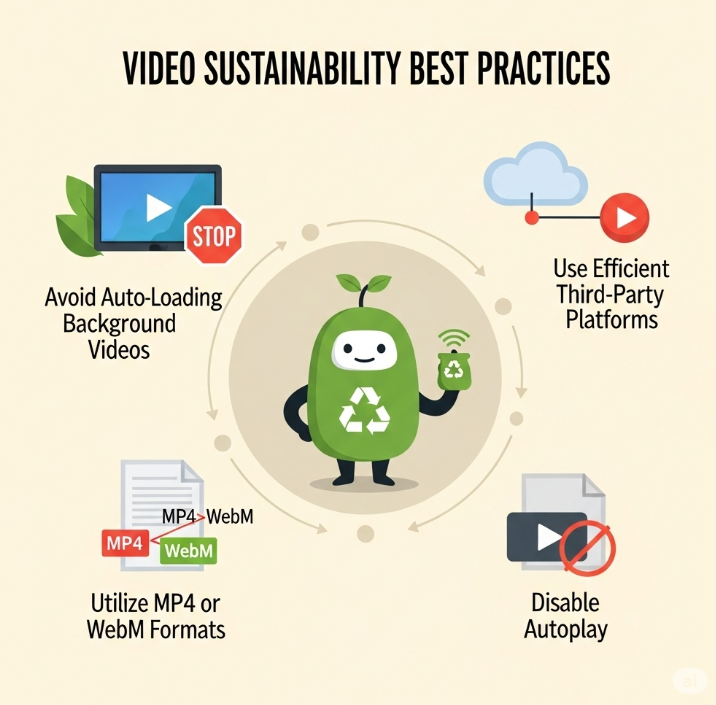
Videos are powerful for engagement, but they are also one of the most energy-intensive elements on the web. Streaming high-resolution videos, especially those that autoplay in the background, dramatically increases the energy required to load a page.
Every second of unnecessary video playback consumes CPU power on user devices, adds data transfer load, and increases carbon emissions.
From a sustainability perspective, every megabyte matters. Optimizing how you use video, or choosing to skip it altogether, can significantly reduce your site’s environmental impact.
This makes smart video usage one of the most effective sustainable web development practices to reduce carbon footprint, particularly for media-heavy or marketing-focused websites.
To reduce emissions:
5. Lazy Load Images and Media
Lazy loading is a powerful technique that improves both performance and sustainability. It works by delaying the loading of non-visible images, videos, or iframes until a user scrolls near them. This means that your site loads only what is needed at first glance, reducing the total data transferred during the initial page load.
Fewer resources loaded upfront lead to faster websites, lower server strain, and decreased energy use on both the server and the visitor’s device. For image-heavy or long-scrolling pages, this can make a significant difference in overall carbon emissions.
Implementing lazy loading is considered one of the easiest and most effective sustainable web development practices to reduce the carbon footprint, with the added benefit of better user experience and SEO performance.
InstaWP enables developers to test lazy loading behavior in staging environments before deploying to production. Additionally, developers can install and configure lazy load plugins for more control.
This lets you validate your lazy load configuration without impacting your live site. Once optimized, these settings can be easily applied to your production environment for better sustainability and speed.
6. Delete Unused Media, Plugins, and Themes
Every file stored on your server uses space and contributes to energy consumption, whether it’s being used or not. Unused media files, inactive plugins, and outdated themes increase the size of your backups, slow down database queries, and require additional server resources during updates, syncs, and scans.
Reducing this digital clutter is a simple yet impactful way to lower your website’s energy usage. It also improves security and site performance. That makes it one of the most practical sustainable web development practices to reduce carbon footprint, especially for WordPress websites that often accumulate bloat over time.
InstaWP helps promote cleaner development practices through its integrated site management capabilities. They can simply connect their sites with the dashboard and uninstall the unnecessary plugins/themes with a single click.

7. Improve User Navigation
Every extra click, unnecessary page load, or confusing navigation path increases the number of server requests and the time a user spends loading content. Poorly structured websites can lead to users loading multiple unnecessary pages just to complete a simple task, which increases data transfer and energy consumption.
Streamlining your site’s navigation through tags and other means helps visitors find what they need faster, with fewer clicks. This reduces both server load and the carbon footprint of every user session. Efficient user journeys are not only great for accessibility and UX but are also a key sustainable web development practice to reduce the carbon footprint.
8. Minify and Compress Code (HTML, CSS, JS)
Uncompressed code files may not seem like a big deal, but every extra kilobyte adds to your page weight. That means longer load times, more bandwidth usage, and higher energy consumption on both the server and the visitor’s device.
Minification works by removing unnecessary characters—such as whitespace, comments, and line breaks—from your HTML, CSS, and JavaScript. Compression goes a step further by optimizing how files are delivered to browsers. Combined, they result in significantly faster load times and lower power usage per page view.
For developers looking to adopt sustainable web development practices to reduce their carbon footprint, this is one of the easiest and most high-impact techniques.
InstaWP gives you a full WordPress environment to experiment with code optimization strategies safely. You can test and fine-tune minification settings using popular tools before pushing changes to your live site.
Also, you get the built-in Code Editor tool to edit the site’s code without any hassle.

Using InstaWP this way allows you to find the right balance between performance and functionality, without risking any disruption to your production site.
9. Limit Tracking Scripts and Third-Party Resources
Analytics, advertising, and tracking scripts often go unnoticed, but they silently weigh down your website. Every third-party request adds to the page size, increases load time, and forces the browser to work harder.
These scripts not only slow the site’s performance but also require additional data transfer with each visit, raising the energy consumption on both the client and server sides.
Reducing or removing unnecessary third-party scripts is one of the most overlooked sustainable web development practices to reduce the carbon footprint. By using only essential tools, you can make your site faster, lighter, and less power-hungry.
10. Block Bad Bots and Enable CDN
Nearly half of all internet traffic comes from bots. Many of these are malicious or irrelevant, such as spam bots, content scrapers, and outdated crawlers. These bots consume server resources without adding any value, increasing bandwidth usage, database queries, and overall energy consumption.
Additionally, serving content from a single data center means users farther away experience slower load times, and your server has to work harder to deliver assets globally. A Content Delivery Network (CDN) solves this by caching and distributing your site’s static content across a network of edge servers.
If you build and launch your WordPress websites with InstaWP, you get built-in CDN and Shield features. Users can integrate services like Cloudflare with their custom domains to simulate real-world security and CDN behaviors. This allows developers to test bot filtering rules and CDN performance before applying them to production environments.
The result is faster load times and less energy use per request due to reduced data transmission distances.
Together, bot protection and CDN integration are powerful, sustainable web development practices to reduce the carbon footprint while also improving security and performance.
Tools to Measure Your Website’s Carbon Footprint
To make meaningful improvements, you first need to know where you stand. Measuring your website’s carbon impact helps you set sustainability benchmarks and validate the results of your optimization efforts.
Here are some trusted tools to help you evaluate your website’s environmental performance:
✅ Website Carbon Calculator
A free, easy-to-use tool that estimates the carbon footprint of any web page. Enter your URL and get insights on emissions, page weight, and hosting type.
✅ Cloud Carbon Footprint Tool (GitHub)
An open-source tool designed for developers to monitor and report the carbon impact of cloud infrastructure. Ideal for those managing larger applications or using multi-cloud environments.
Access it on GitHub
✅ GTmetrix + Lighthouse
While these tools don’t calculate carbon emissions directly, they measure critical performance metrics—like page size, number of requests, and load speed—that correlate with energy usage. Use them to track your progress as you adopt sustainable web development practices.
Conclusion: Code Smarter, Cleaner, and Greener
Web sustainability isn’t about doing more—it’s about doing things better. Cleaner code, faster load times, and fewer server resources don’t just make websites perform better; they help reduce the environmental cost of being online.
The best part? You don’t have to overhaul your workflow to make an impact. With InstaWP, developers are already reducing their carbon footprint simply by using auto-expiring sandboxes, container-based hosting, and clean starter templates.
Join thousands of developers building faster and cleaner with InstaWP, and help decarbonize the web.
FAQs
Q1. What is sustainable web development?
Sustainable web development refers to coding and infrastructure practices that reduce a website’s environmental impact by minimizing energy usage, emissions, and server load.
Q2. How can I make my website more eco-friendly?
Compress images and code, lazy load media, remove unused content, and host with green providers. Tools like InstaWP also help reduce unnecessary server emissions by auto-sleeping development environments.
Q3. Does using InstaWP reduce my carbon footprint?
Yes. InstaWP’s auto-sleeping sandboxes and green-hosting architecture, powered by Google Cloud reduce idle resource consumption and promote more efficient development workflows.
Q4. Is switching to green hosting enough?,
It’s a great start, but it’s only part of the solution. Pairing green hosting with sustainable coding practices, lightweight media, caching, and smarter infrastructure delivers a far greater environmental benefit.