A post titled “Bye bye WordPress” blew up on r/ClaudeCode this week. 367 upvotes. The developer converted two client sites to Astro and React, hosted them on Vercel for free, and said he’s never touching WordPress again.

We run a cloud platform for WordPress. I’ve spent years building InstaWP. And honestly? I get it.
For a five-page brochure site with a contact form, WordPress is overkill. It always has been. The only reason agencies used it for those projects was because building something custom took too long.
That’s no longer true. Claude Code can scaffold a static site in an afternoon. Deploy it for free. Get a perfect Lighthouse score. One commenter said he runs his blogs on S3 + CloudFront for under a dollar a month.
So yeah, for that slice of the market, the “bye bye” crowd has a point. For now.
But those developers aren’t allergic to WordPress, they’re allergic to friction. Remove the friction, and there’s no reason to leave. That’s the part we’re solving.
The Part Everyone Forgets
The most upvoted comment in the thread, 217 upvotes, was a reality check: with a custom solution, you own the maintenance forever.

“This is an extremely important point that most vibe coders forget about: keep in mind that with a custom solution you’re responsible for maintaining the code going forward and handling any issues and that there may be moments where agents get lost and need input (highly unlikely with a simple site but if things are planned to grow becomes more important).
With WordPress, the maintenance burden is effectively outsourced to the WP maintainers and maintainers of any plugins you use. The software development lifecycle doesn’t end the second you deploy your site. This isn’t to discourage you, I think more sites could use being custom instead of WP but you should go into it knowing what you’re signing up for.”
The moment a site needs e-commerce, content scheduling, role-based editing, email marketing integration, or anything dynamic, the “just vibe-code it” approach falls apart. An agency owner in the thread said it plainly: his clients need HubSpot-level features and he’s not rebuilding that in React.
Another commenter made a point that keeps getting ignored: every editor in the world knows how to use WordPress. Retraining a marketing team on a custom admin panel costs real time and money. And the plugin ecosystem, getting MailChimp working in two clicks versus building that integration from scratch, that gap is still massive.
WordPress isn’t dying. But the way we build with it is changing fast.
The Real Story Nobody Wrote About
Buried in that 236-comment thread were developers doing something much more interesting than leaving WordPress. They were supercharging it with AI.
One developer gives Claude Code SSH access to his server and manages his WordPress sites through natural language. Called it a “game changer.”
An agency is building WordPress sites through ACF JSON and MCP integrations, said they’re moving at “absolute lightspeed.”

A German developer is building a theme from scratch with Claude Code, disabling everything unused, writing lean custom functions, while still getting WordPress core security updates. His metaphor: “I use the WP chassis and inside runs my own motor.”

That last one is the real story. Not “AI replaces WordPress”, but “AI removes every reason people complained about WordPress.”
What We’re Building Around This
At InstaWP, we’ve been watching this shift closely. And we think the answer isn’t to abandon WordPress, it’s to make the AI + WordPress workflow so fast that there’s no reason to leave.
Here’s what that looks like in practice, across three layers.
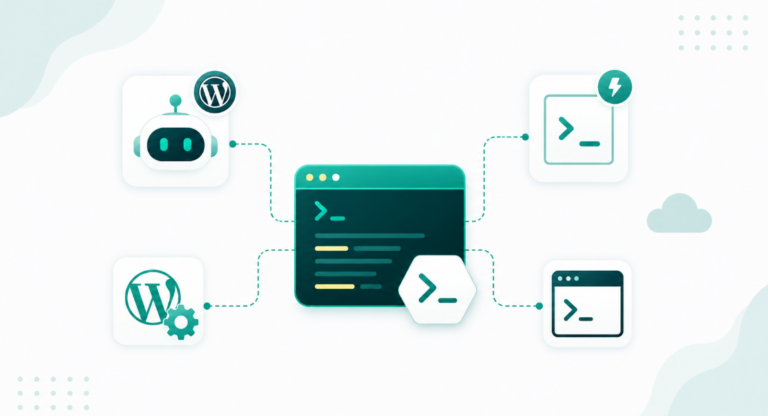
Layer 1: InstaWP MCP: give AI agents native WordPress access.
The developers in that Reddit thread are manually SSHing into servers and configuring API credentials to let Claude Code talk to their WordPress sites. InstaWP MCP does that in one click.

Your WordPress AI agent can update 340 blog posts, run a full SEO audit, harden security settings, profile slow database queries, all through natural language, no credential juggling.
Layer 2: AI-first theme and plugin development.
Instead of starting from a starter theme and customizing for weeks, describe what you want. Claude Code builds a clean custom theme with only the templates and ACF field groups you need. Need a client portal with invoices, document uploads, and a ticket system? Describe it.
Need to consolidate six bloated plugins into one lean utility plugin? Describe it. The AI-built WordPress themes end up leaner than traditional ones because the agent only generates what you ask for.
You can use our Local Mount feature to mount folders locally of InstaWP sites as if they are “local” and use claude code type AI coding agent as if they are building a site in Local.

Layer 3: A CLI that bridges local dev and cloud WordPress.
This is the piece nobody in the thread even thought to ask for. The developers leaving WordPress love their local flow, code, git push, deploy. The developers staying love the managed infrastructure. Our CLI gives you both:
instawp create --name=clientsite–snapshot=mysnap; create a site from your terminal from a snapshotinstawp sync— every local save reflects on the cloud site instantlyinstawp wp search-replace 'old-domain.com' 'new-domain.com'— run WP-CLI on the remote site as if it’s local
The killer workflow: client request comes in at 9am → create the site → Claude Code builds the feature locally → instawp sync push → send the staging URL → client approves → deploy to production → done before lunch.
That’s the Vercel-like developer experience, but for WordPress.
Where This Goes
The “bye bye WordPress” take makes for a good Reddit post. It’s clean, it’s satisfying, and for brochure sites it’s probably right.
But for everything else, and that’s most of the web, the future isn’t replacing WordPress. It’s making WordPress so fast to build on and so effortless to maintain that the debate becomes irrelevant.
The real question was never “WordPress or not.” It was: can someone give WordPress developers the same AI-powered velocity that’s pulling people toward Astro and React?
That’s what we’re building at InstaWP. And based on what I’m seeing in threads like this one, the timing couldn’t be better.